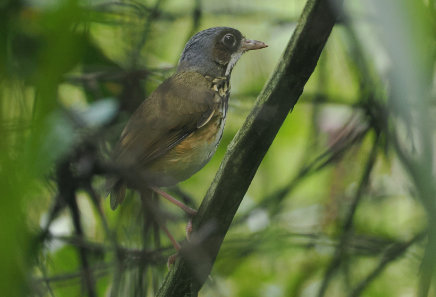
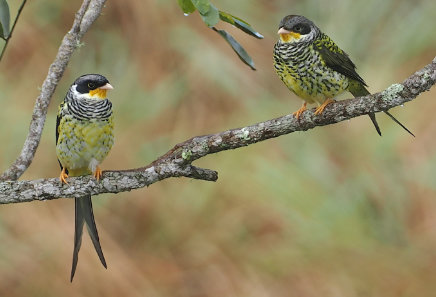
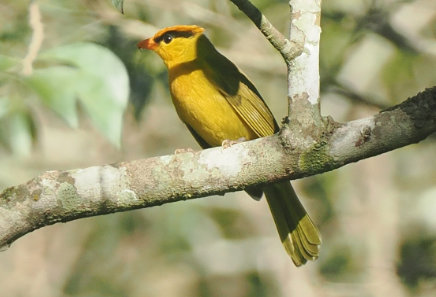
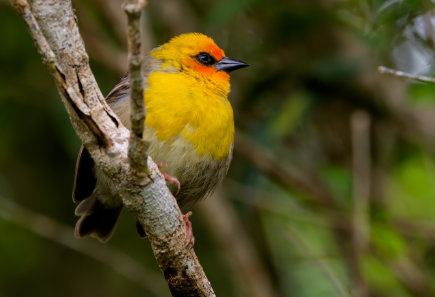
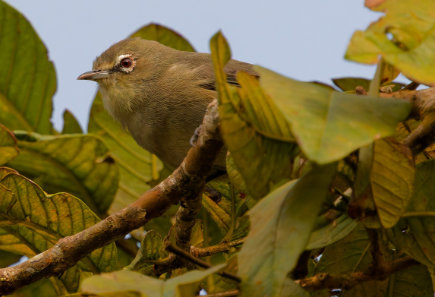
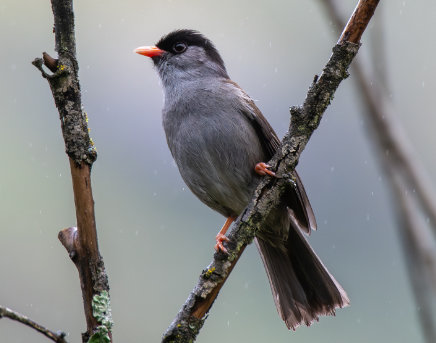
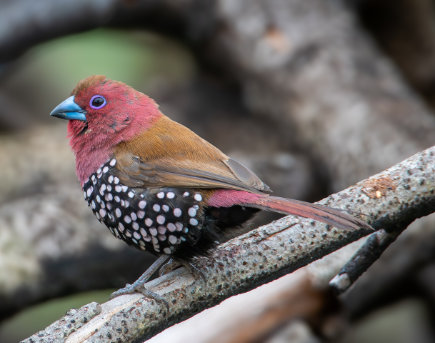
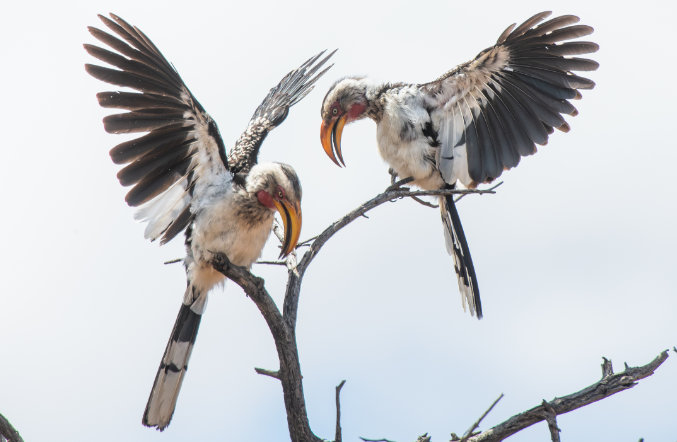
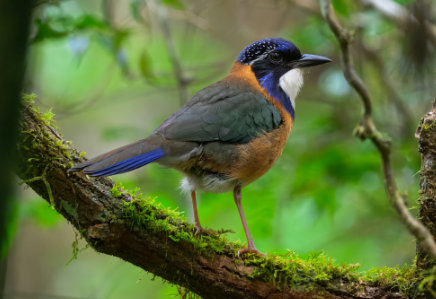
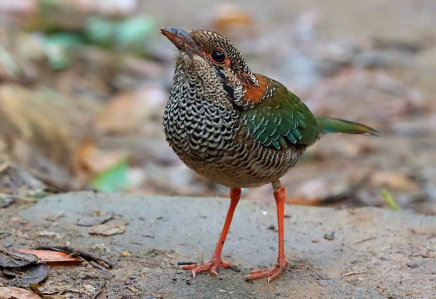
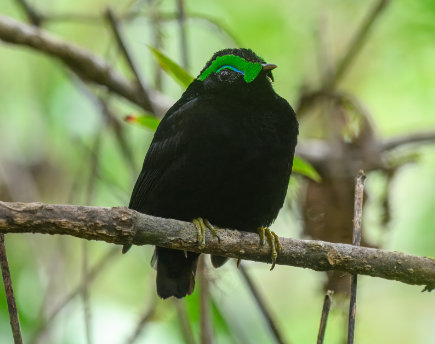
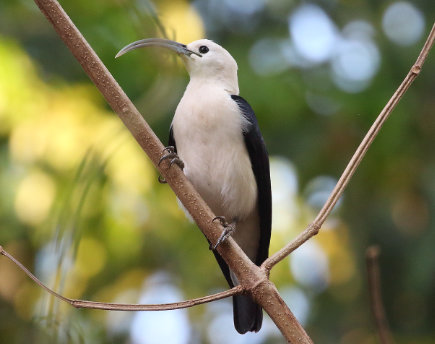
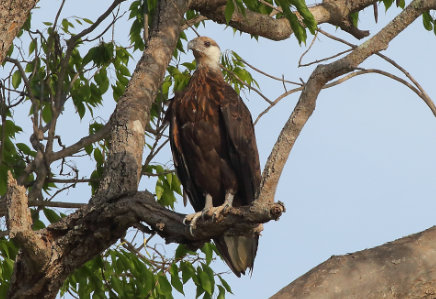
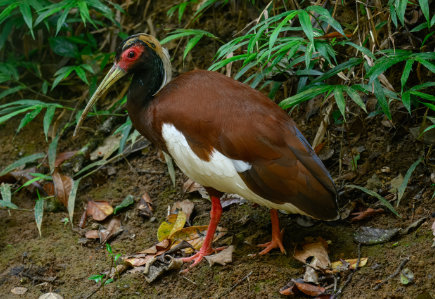
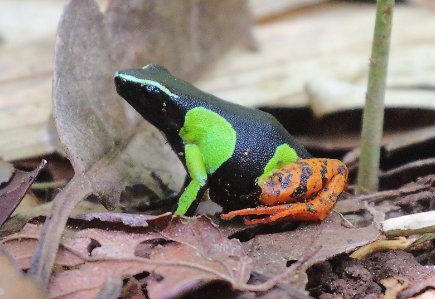
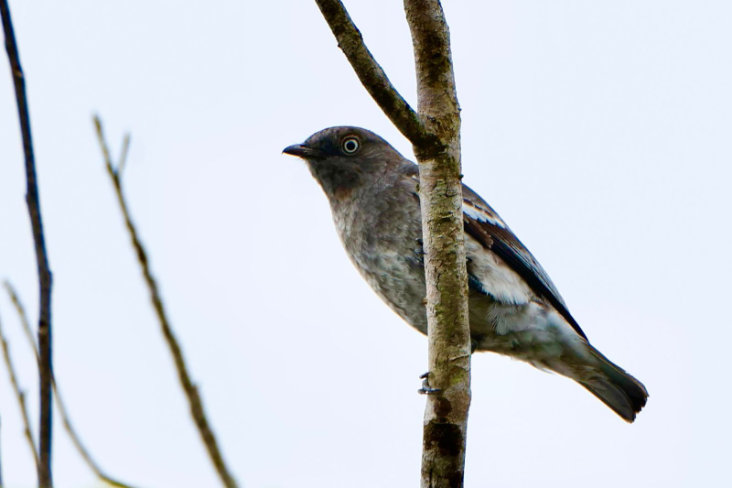
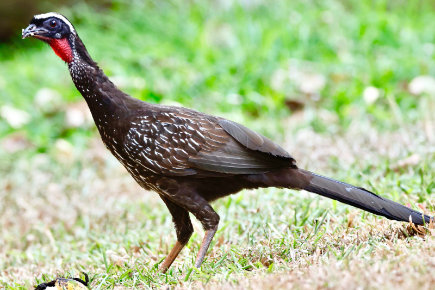
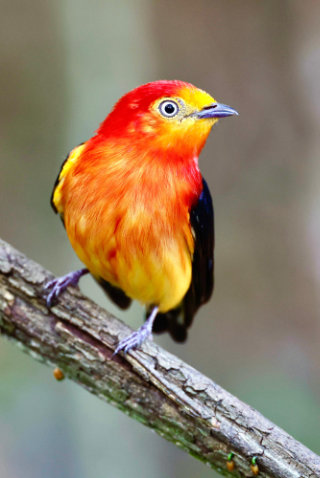
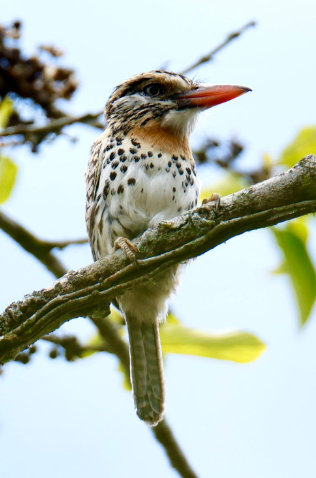
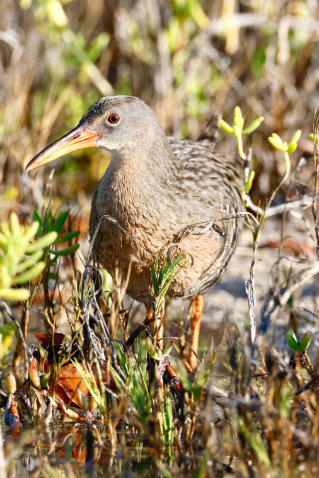
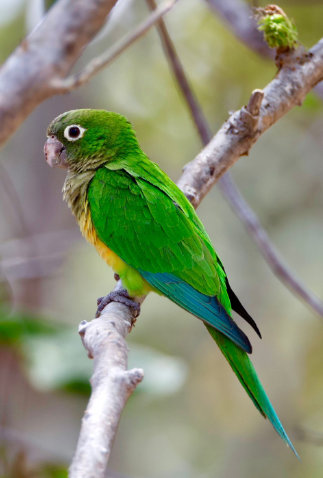
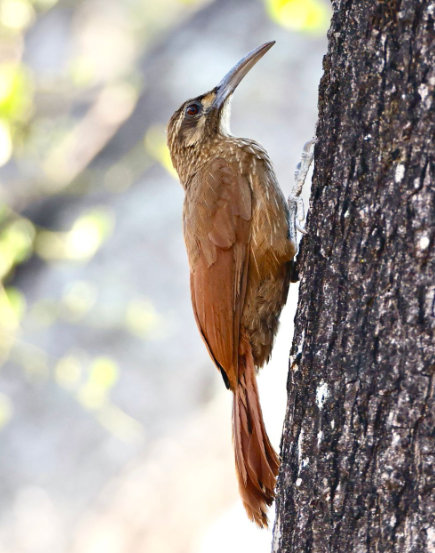
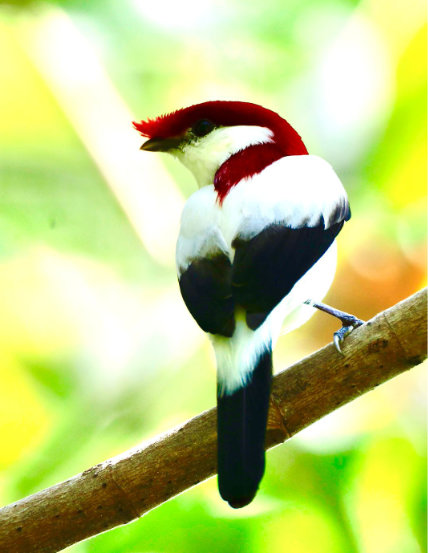
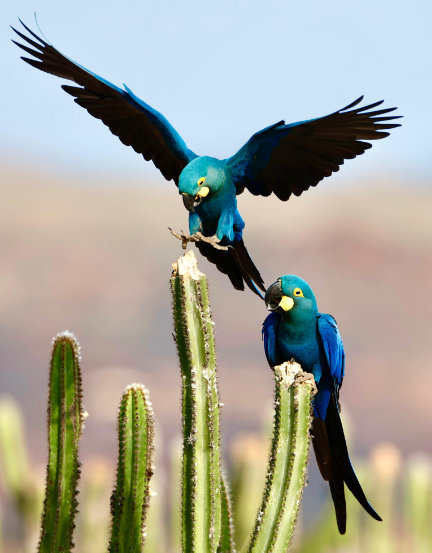
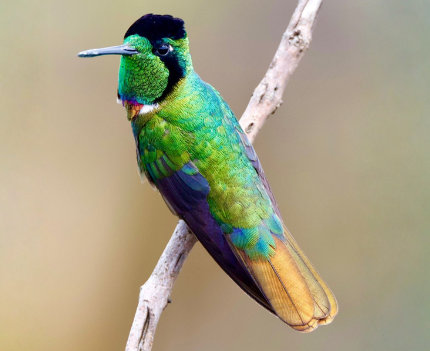
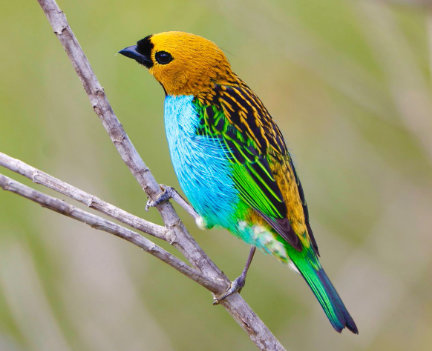
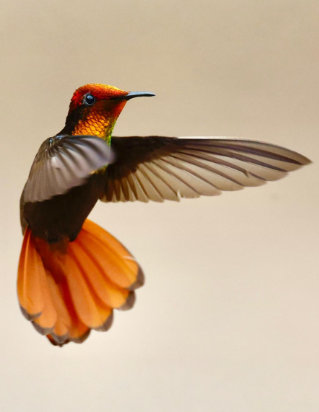
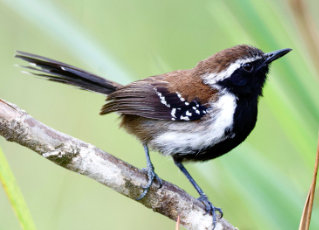
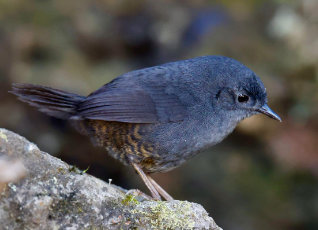
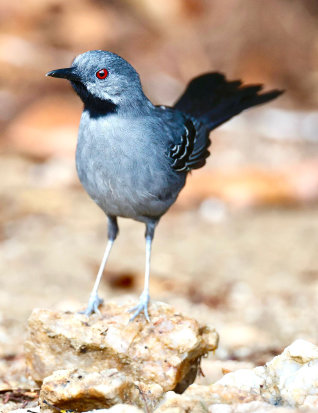
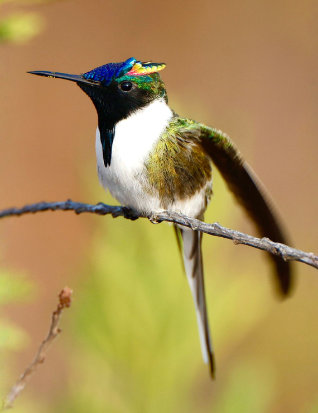
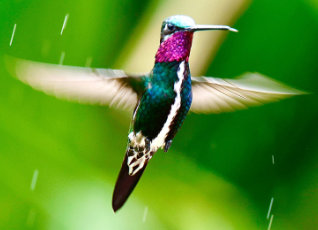
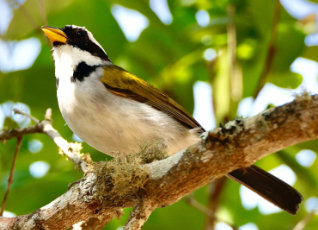
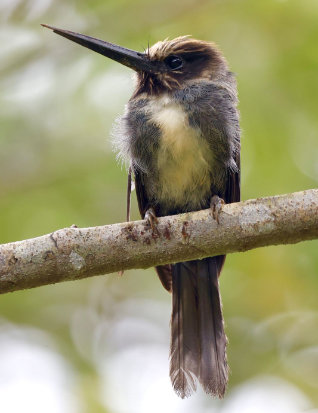
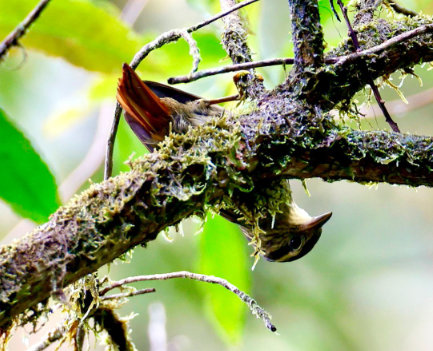
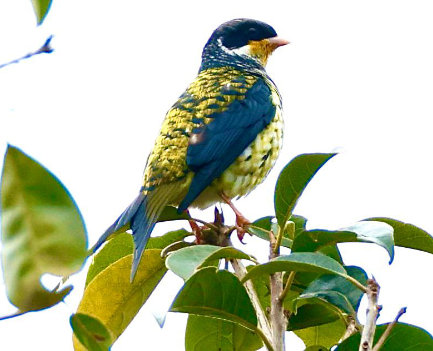
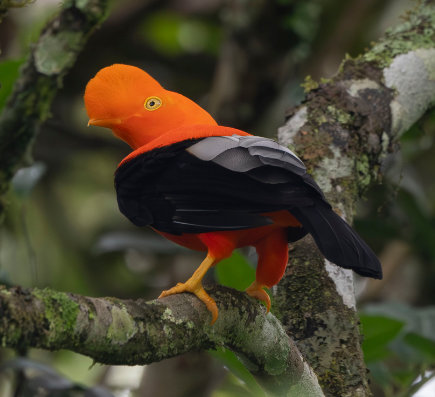
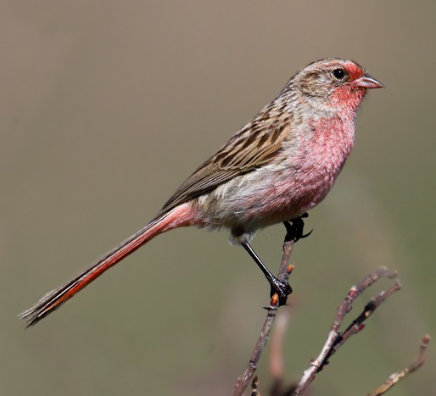
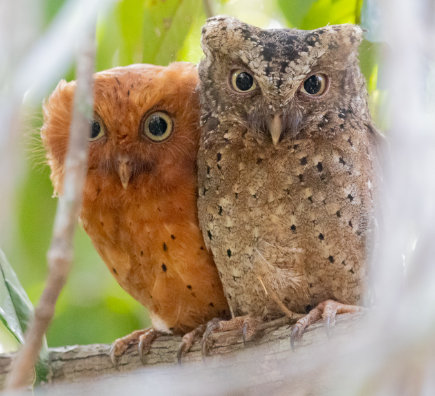
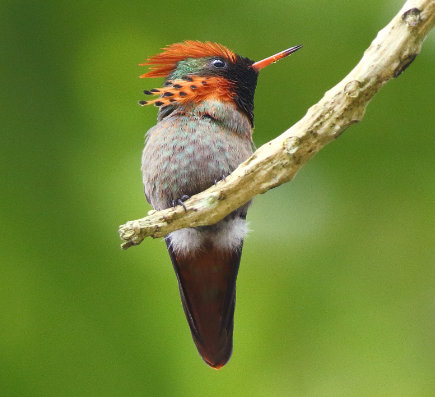
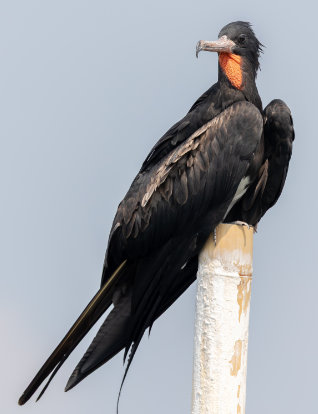
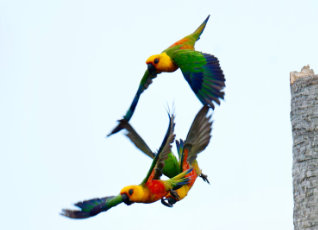
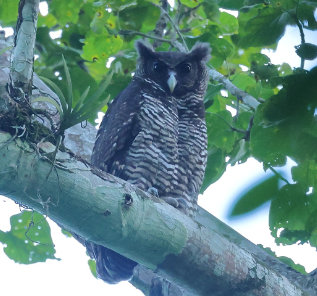
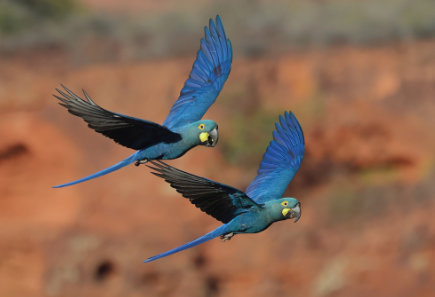
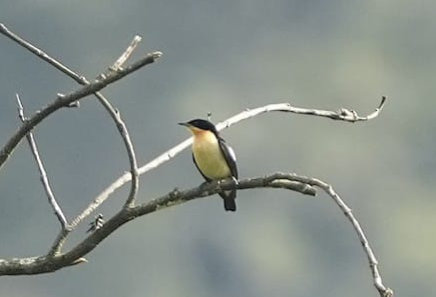
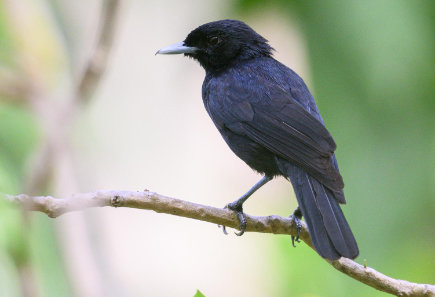
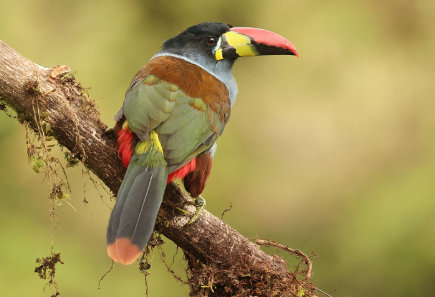
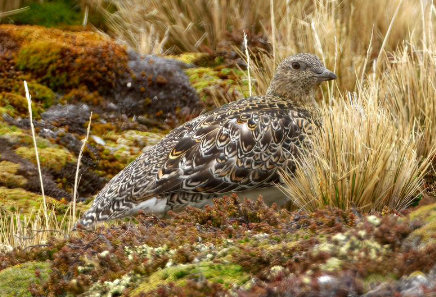
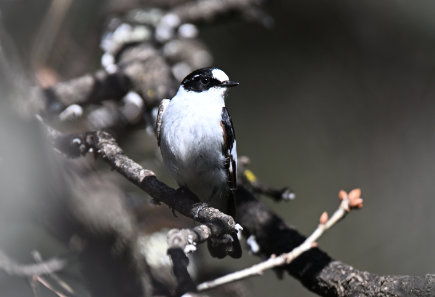
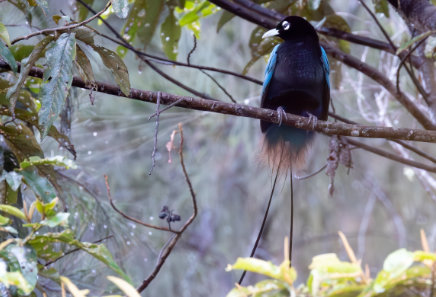
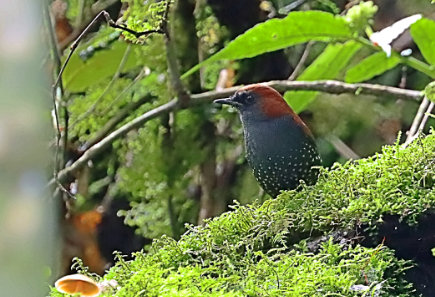
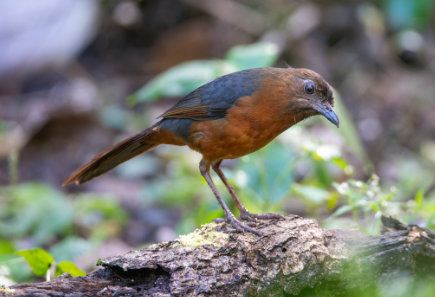
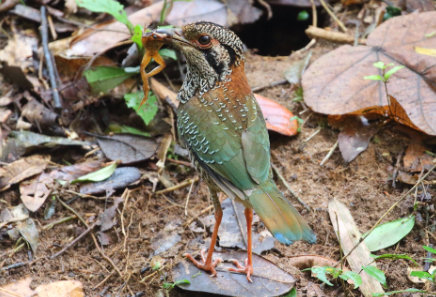
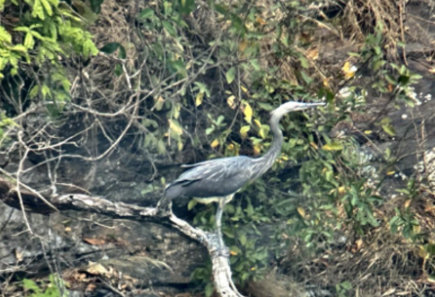
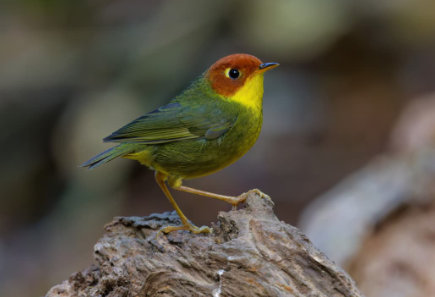
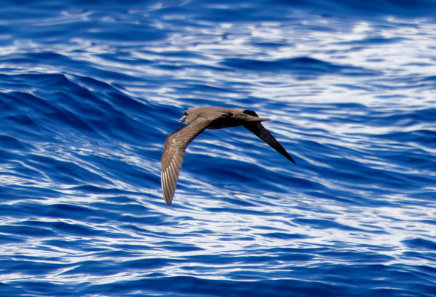
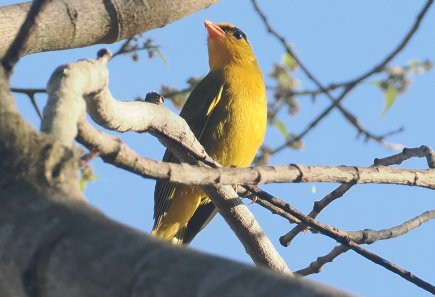
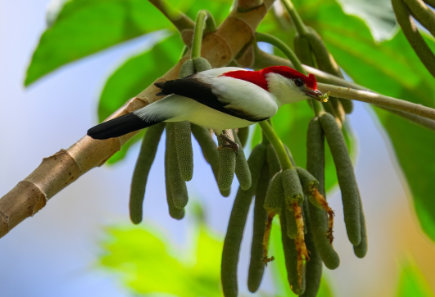
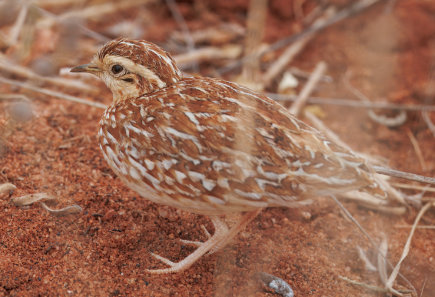
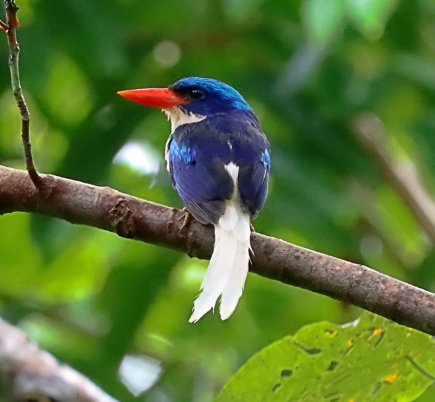
Common Sunbird Asity, Giraffe-necked Weevil, Rufous-crested Coquette by Lev Frid • White-fronted Bee-eater by Julian Parsons • Black-crowned Pitta by Daniel Danckwerts


Dear Friends of Rockjumper, 

As we come to the close of another remarkable year, we are reminded once again of the joy and purpose that birding brings to our global community. From remote islands in the Indian Ocean to the sweeping savannas of Africa and the vibrant forests of South America and Asia, our journeys in 2025 have been filled with discovery, camaraderie and countless unforgettable sightings. None of this would be possible without the enthusiasm and trust of those who travel with us, and for that we extend our sincere appreciation. 

This final newsletter of the year brings together highlights from recent tours, exciting updates from our team around the world and a preview of fresh adventures on the horizon for 2026. Whether you are planning your next journey or simply enjoying the stories and sightings from afar, we hope these pages capture the spirit of exploration and the shared passion for birds that unite us all. 

Thank you for your continued support and for being part of the Rockjumper family. We wish you a peaceful and enjoyable holiday season and look forward to many more memorable moments in the year ahead. 

TEAM NEWS

Welcoming Little Aubrey Wren

In October, my wife Rachel and I became Grandparents for the first time to a beautiful little girl that her mum and Dad have named Aubrey Wren. We are besotted with her (and I’m planning to take her birding… but she needs to grow a bit first!)

by Paul Varney

A Sunset “Yes” in the Zambezi Valley

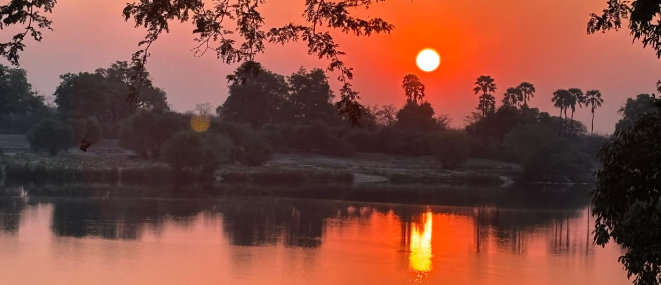
I proposed to Brittany in the Zambezi valley this October, thankfully she said yes! To make the moment even more special, we were surprised by a herd of Elephant grazing in the backdrop as the sun set over Lake Kariba.

by Reece Dodd

FESTIVALS

Feather Fest

Earlier this year, Forrest Rowland exhibited Rockjumper at FeatherFest in Galveston, Texas, one of the premier birding festivals in the Gulf region. With its combination of migration hotspots and coastal birding opportunities, the event provided an excellent platform to meet North American birders. We look forward to returning for next year’s edition.

Global Birdfair 2026

Team Rockjumper was proud to attend Global Birdfair 2025 this July in Rutland, UK. It is the largest international gathering of birders, conservationists, and tour operators. This premier event brought together exhibitors from around the world, representing birding destinations across every continent. Visitors explored hundreds of stands featuring tour companies, conservation NGOs, artists, authors, optics manufacturers, and field equipment suppliers, making it the true global marketplace for birding and nature travel.

Highlights included keynote lectures, expert panel discussions, film screenings, and a wide range of workshops covering bird identification, fieldcraft, conservation, and storytelling. The Birdfair’s famous auction once again raised significant funds for international conservation projects, underscoring the event’s vital role as both a celebration of birding and a driver of global conservation efforts.

Rockjumper’s team was on hand to share our latest itineraries, including expanded Birding Direct offerings and specialty wildlife tours. We had the opportunity to meet many of our friends, partners, and loyal clients in person, while also welcoming new birders eager to explore the world with us. Global Birdfair remains a key platform for Rockjumper to connect with the international birding community and to highlight our ongoing commitment to conservation and world-class birding experiences.

Rockjumper is looking forward to attending the Rio Grande Valley Birding Festival and the Southwest Wings Birding and Nature Festival next year. Dates are 11 to 15 November 2026 and 6 to 9 May 2026 respectively. We look forward to seeing you there.

TOUR HIGHLIGHTS

Argentina Southern Patagonia - Bobby Wilcox

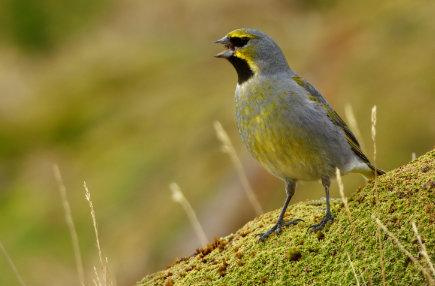
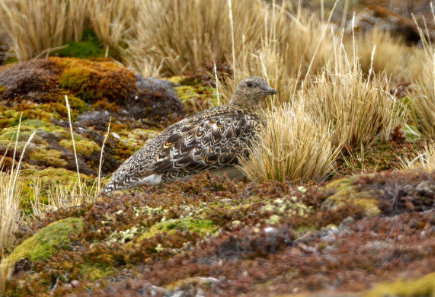
Home to an array of sought after Patagonian endemics and regional treasures, Southern Patagonia delivered an outstanding suite of targets. Highlights included the mythical Hooded Grebe in its famed haunts on the mesetas, superb views of Magellanic Plover, the dazzling Yellow bridled Finch, cryptic specialties like Dark-faced and Ochre-naped Ground Tyrants, Patagonian and Elegant-crested Tinamous, White-bellied Seedsnipe and the delightful Tufted Tit Tyrant and White-throated Treerunner. Waterfowl and marsh birds also impressed, with Spectacled Duck, Torrent Duck, Austral Rail and the full complement of regional steamer ducks providing exceptional experiences.

Yellow-bridled Finch by Bobby Wilcox
Puma by Bobby Wilcox

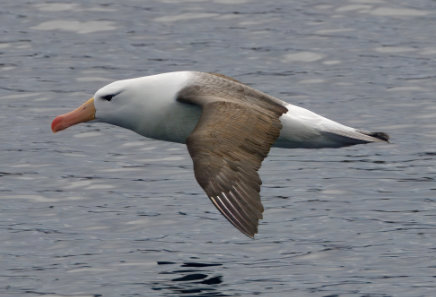
The dramatic coastlines and open seas produced an exciting parade of seabirds and marine wildlife. Black-browed Albatrosses, Southern Giant Petrels, South American Sea Lions, Elephant Seal and Peale’s Dolphins all featured prominently, while Isla Martillo gave unparalleled views of Magellanic and Gentoo Penguins busily tending their nests. Inland, Torres del Paine offered one of the tour’s most memorable moments, a serene female Puma at close range in the early morning light.

Led by Bobby Wilcox, this journey through some of the wildest corners of Argentina and Chile showcased Southern Patagonia at its very best, delivering spectacular scenery and a phenomenal cast of birds and mammals. A fitting finale came in Tierra del Fuego National Park where Great Grebes glided across quiet lakes and a magnificent female Magellanic Woodpecker brought the adventure to a perfect close.

White-bellied Seedsnipe by Bobby Wilcox
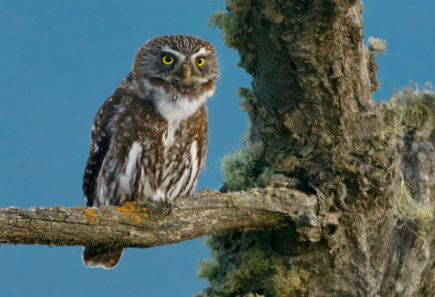
Austral Pygmy Owl by Bobby Wilcox
Black-browed Albatross by Bobby Wilcox
Australia East Coast - Greg de Klerk

Eastern Australia stands as one of the most diverse and rewarding birding regions on the continent, offering an extraordinary blend of tropical rainforests, temperate woodlands, rugged escarpments and iconic coastal landscapes. From the lush Wet Tropics of Queensland to the mallee heartlands of Victoria, this superb route showcases a breathtaking cross section of Australasia’s unique avifauna and mammal life.

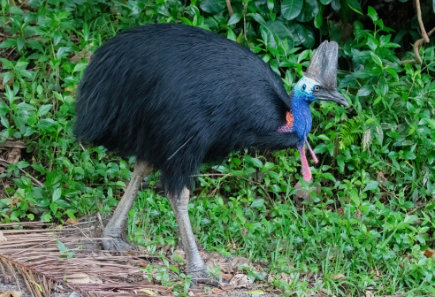
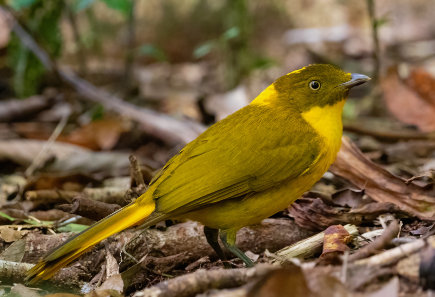
The ancient rainforests of the Daintree and Atherton Tablelands delivered an unforgettable suite of northern specialties including Southern Cassowary, Golden, Great & Tooth-billed Bowerbirds, Atherton Scrubwren, Chowchilla, Grey-headed Robin, Sarus Crane, Brolga, Spotted Catbird, Wompoo & Rose-crowned Fruit Doves, Torresian Imperial Pigeon, Black Butcherbird, Lovely & Red-backed Fairywrens, Crimson Finch, Pheasant Coucal, Restless & Leaden Flycatchers, Papuan & Tawny Frogmouth, Little, Azure, Sacred & Torresian Kingfisher, Blue-winged Kookaburra, Pale-headed Rosella and Victoria’s Riflebird. Exceptional shorebirding brought Sharp-tailed Sandpiper, Red-necked Stint, Curlew Sandpiper, Grey Tattler, Far Eastern Curlew, Eurasian Whimbrel, Red-capped Plover, Siberian Plover, Greater Sand Plover, Australian Tern and White-bellied Sea Eagle.
Southern Cassowary by Greg de Klerk
Golden Bowerbird by Greg de Klerk
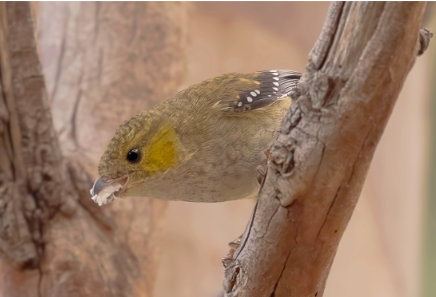
Forty-spotted Pardalote by Greg de Klerk

Lamington’s Gondwanan forests added Satin Bowerbird, Albert’s Lyrebird, Australian Logrunner, Eastern Whipbird, Wonga Pigeon, Australian King Parrot, Crimson Rosella, Yellow-throated & White-browed Scrubwren, Red-browed Treecreeper, Bassian & Russet-tailed Thrush, Rose Robin, Green Catbird, Noisy Pitta and Paradise Riflebird, while coastal New South Wales offered Pilotbird, Eastern Bristlebird, Superb Lyrebird, Gang-gang Cockatoo and Eastern Rosella.

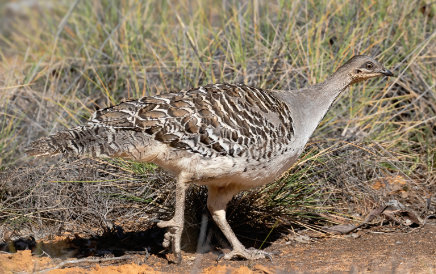
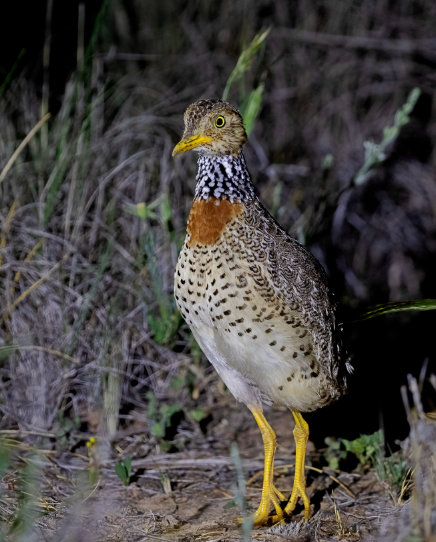
Victoria’s inland plains delivered one of the tour’s defining moments with outrageously good views of Plains-wanderer, accompanied by a rich suite of dry-country species including Yellow-billed Spoonbill, Emu, Australian Owlet-Nightjar, Australian Hobby, Purple-backed & White-winged Fairywren, Grey-crowned Babbler, White-winged Triller, Yellow-throated Miner, Spiny-cheeked, Singing, Striped & Black Honeyeater, Banded Lapwing and Inland Dotterel. The mallee regions produced superb encounters with Malleefowl, Mallee Emu-wren, Striated Grassbird, Regent Parrot, Chestnut Quail-thrush, Chestnut-rumped Thornbill, Crested Bellbird, Southern Whiteface, Eastern Bluebonnet, Pink Cockatoo and the Mallee race of Australian Ringneck.

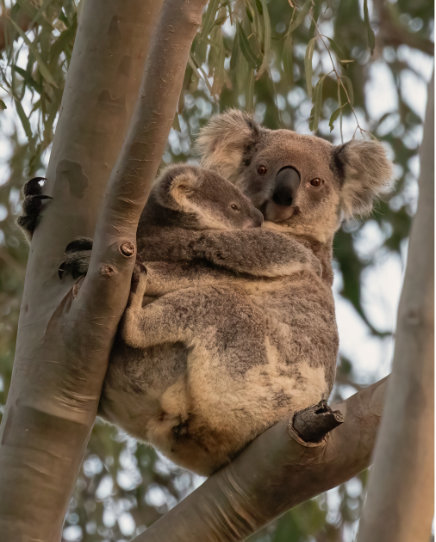
A spectacular coastal finale along the Great Ocean Road added Koala, Powerful Owl, Hooded Plover, Australasian Gannet, Yellow-tailed Black Cockatoo, Rufous Bristlebill and a fine selection of waterbirds. The main tour concluded with an impressive 255 species of birds and 30 mammals recorded.
Malleefowl by Greg de Klerk
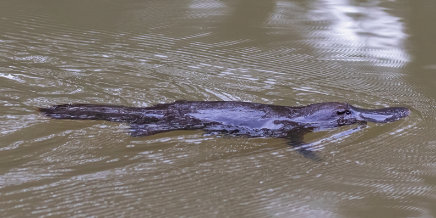
Platypus by Greg de Klerk
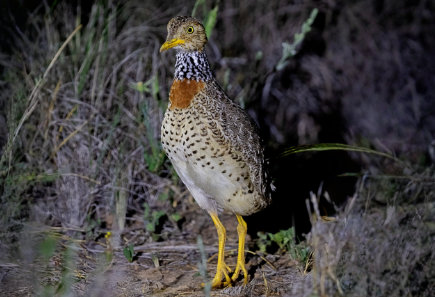
Plains-wanderer by Greg de Klerk
Koala by Greg de Klerk

Tasmania added its own distinctive charm, from Cradle Mountain’s alpine valleys to Bruny Island’s coastal forests. Highlights included Pink Robin, Flame Robin, Grey Goshawk (white phase), Musk Duck, Forest Raven, Cape Barren Goose, Striated Fieldwren, Crescent Honeyeater, Scrubtit, Black Currawong, Tasmanian Nativehen, Yellow Wattlebird, Tasmanian Thornbill, Tasmanian Scrubwren, Dusky Robin and Yellow-throated Honeyeater. Bruny Island delivered outstanding views of Forty-spotted Pardalote, Green Rosella, Strong-billed & Black-headed Honeyeater, Beautiful Firetail, Brush Bronzewing, Olive Whistler, Scarlet Robin, Pallid Cuckoo, Pied & Sooty Oystercatcher, Black-faced Cormorant and the critically endangered Swift Parrot.
Bolivia Remote Endemics - Stephan Lorenz

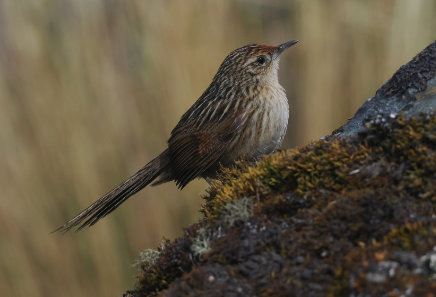
From the windswept heights of La Cumbre to the lush cloud forests of Unduavi, the opening days of our Bolivia Remote tour produced standout Andean specialties including Giant Coot, Rufous-bellied & Gray-breasted Seedsnipes, Scribble-tailed Canastero, Glacier Finch, Boulder Finch, Hooded Mountain-Toucan and Bolivian Antpitta. The Yungas reserves added Crested Quetzal, Versicolored Barbet, Blue-banded Toucanet, Yungas Pygmy-Owl, Striped Treehunter, Bolivian Brushfinch and the scarce Slaty Tanager, while a successful return search secured superb views of the near-mythical Scimitar-winged Piha.

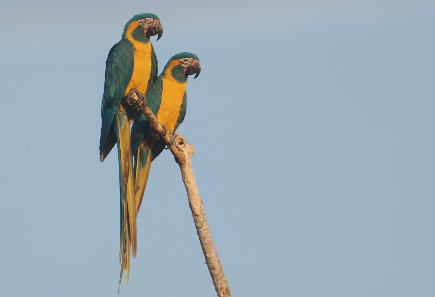
Blue-throated Macaw by Stephan Lorenz
Scribble-tailed Canastero by Stephan Lorenz
Scimitar-winged Piha by Stephan Lorenz

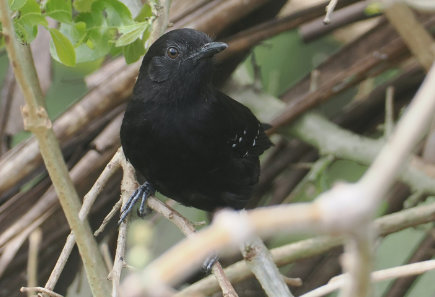
The Amazonian foothills around Sadiri Lodge offered an exceptional concentration of lowland and foothill birds with Sungrebe, Hoatzin, Point-tailed Palmcreeper, Great Potoo, Many-spotted Hummingbird, Sharpbill, Banded Antbird, Hairy-crested Antbird, Spectacled Bristle-Tyrant, Subtropical Pygmy-Owl and unforgettable encounters with Rufous-vented Ground-Cuckoo. Extensive wetlands and savannas en route to Trinidad and Riberalta added Orinoco Goose, Southern Screamer, Maguari Stork, Jabiru, Scarlet-headed Blackbird, Great-billed Seed-Finch and Mato Grosso Antbird.

Around Riberalta’s varzea forests, one of the tour’s most anticipated targets, the endemic Masked Antpitta, showed beautifully, joined by Purus Jacamar, Plumbeous Antbird, Black-spotted Bare-eye and Johannes’s Tody-Tyrant. The grasslands of Pampa San Lorenzo delivered Ocellated Crake, White-eared Puffbird, Golden-collared Toucanet, Natterer’s Slaty-Antshrike and White-rumped Tanager. A dedicated search north of Trinidad yielded rare and prolonged views of the highly sought Unicolored Thrush.

One of the most memorable days came in the Llanos de Moxos where a dozen Blue-throated Macaws, including perched pairs in perfect light, put on a spectacular show. This region also delivered Sunbittern, Pale-crested Woodpecker, Yellow-collared Macaw, Great Rufous Woodcreeper, Red-billed Scythebill and Plush-crested Jay among more than 130 species recorded that day.

Mato Grosso Antbird by Stephan Lorenz
Masked Antpitta by Stephan Lorenz
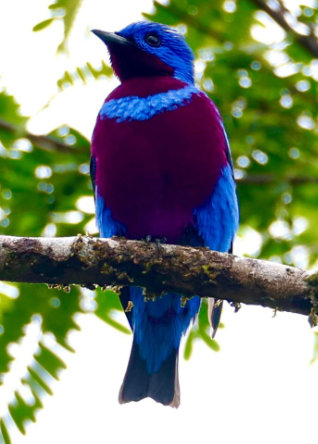
Swallow-tailed “Palkachupa” Cotinga by Stephan Lorenz

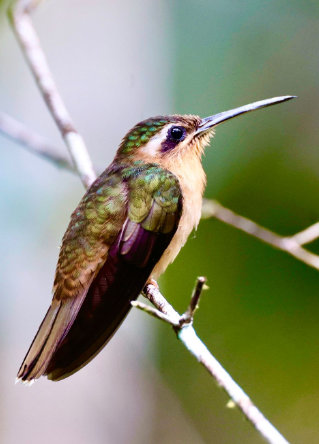
The extension carried the adventure into the high Andes and remote dry valleys, beginning at Lake Titicaca with Titicaca Grebe, Plumbeous Rail, Many-colored Rush Tyrant and Puna Pipit. In the Yungas en route to Apolo, highlights included Torrent Duck, White-bellied Hummingbird, Rufous-crested Coquette, Stripe-chested Antwren, Amazonian Umbrellabird and Yungas Tody-Tyrant. Near Aten, the critically endangered Swallow-tailed “Palkachupa” Cotinga performed superbly, accompanied by Green-capped Tanager and a suite of wetland and forest species.

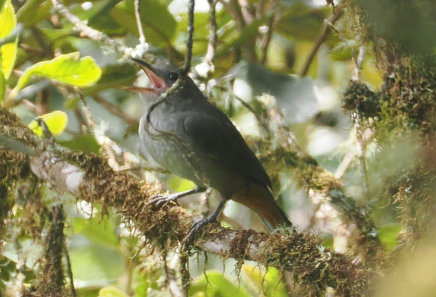
The expedition culminated in the remote Maraipacho Valley where early morning song led to exceptional views of the recently described Inti Tanager, one of South America’s most coveted new endemics. Supporting species included Long-billed Starthroat, Hook-billed Kite, Western Striolated Puffbird, Ocellated Piculet, Black-capped Antwren and Ashy Antwren. Final days added Pavonine Cuckoo, Slaty Gnateater, White-capped Dipper, Golden Tanager and at Sorata the dazzling Black-hooded Sunbeam.

Bolivia proved once again to be one of the continent’s most thrilling birding destinations, a land of immense wilderness, rare endemics and unforgettable moments across some of South America’s richest and least explored habitats.

Inti Tanager by Stephan Lorenz
Indian Ocean Islands – Paul Varney

The Indian Ocean Islands delivered an exceptional journey across Seychelles, Rodrigues, Mauritius and Reunion with remarkable scenery, rare birds and some of the world’s most inspiring conservation success stories. Our tour enjoyed superb views of nearly every endemic species, along with one of the scarcest seabirds on Earth.

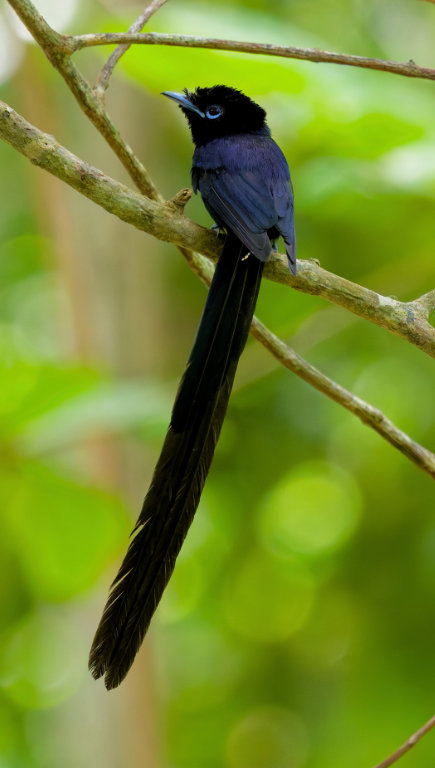
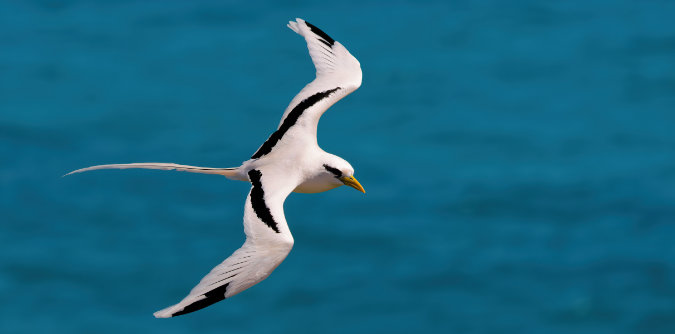
Seychelles offered an awesome start, producing Madagascar Turtle Dove, Seychelles Blue Pigeon, White Tern, White-tailed Tropicbird, Seychelles Bulbul, Seychelles Sunbird and the critically endangered Seychelles White-eye. Evening outings brought Seychelles Kestrel perched at its roost and eventually a Seychelles Scops Owl. On Cousin Island, participants were surrounded by seabirds including Bridled and White Tern, noddies, Wedge-tailed Shearwater and Great Frigatebird, while species such as Seychelles Magpie Robin, Seychelles Warbler and Seychelles Fody showed effortlessly at close range. La Digue provided excellent views of the striking Seychelles Paradise Flycatcher with males sporting long tail streamers.

Rodrigues, remote and little visited, delivered Rodrigues Warbler and Rodrigues Fody in the Grand Montagne reserve, together with soaring Rodrigues Flying Fox. The group also recorded Asian House Shrew around the hotel gardens.

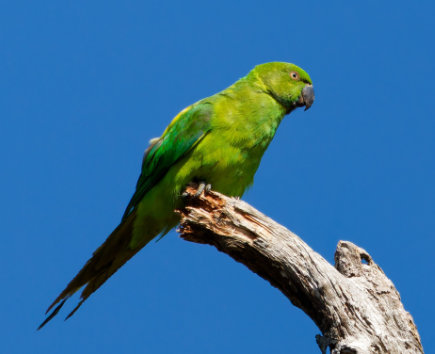
Mauritius brought a powerful sequence of endemics that have been rescued from the brink, including superb encounters with Pink Pigeon, Mauritius Fody and Mauritius Olive White-eye on Ile aux Aigrettes. Further forest birding produced Mauritius Bulbul, Echo Parakeet, Mascarene Martin, Mascarene Swiftlet, Mauritius Cuckooshrike and Mascarene Paradise Flycatcher along with repeat views of Pink Pigeon sunning itself near the trail. A confiding Mauritius Kestrel offered an especially memorable moment.

Rodrigues Fody by Paul Varney
Seychelles White-eye by Paul Varney
Seychelles Paradise Flycatcher by Paul Varney
White-tailed Tropicbird by Paul Varney

Reunion provided one of the tour’s greatest highlights. Only minutes into the pelagic, an all black petrel materialised, confirmed as Mascarene Petrel, a species seen by very few birders worldwide. The outing also produced Barau’s Petrel, Tropical, Wedge-tailed and Flesh-footed Shearwaters, Sooty Tern, Brown and Lesser Noddy, plus Spinner Dolphins. Belouve Forest the next day yielded excellent looks at Reunion Bulbul, Reunion Stonechat, Reunion Grey White-eye, Mascarene Paradise Flycatcher and Reunion Olive White-eye. A striking adult Reunion Harrier patrolling the valley completed the island’s impressive list.

Across seven islands our group recorded 75 species including 28 endemics, alongside once in a lifetime encounters such as Mascarene Petrel and the inspiring recovery stories of species like Pink Pigeon, Mauritius Kestrel and Seychelles Magpie Robin. A beautifully paced tour through some of the most exquisite and biodiverse islands on the planet.

Echo Parakeet by Paul Varney
Mascarene Petrel by Paul Varney
Pink Pigeon by Paul Varney
Indonesia - RWPI Cruise - Glen Valentine & Dušan Brinkhuizen

Once again, our back-to-back 2025 Remote West Papuan Islands Cruises and Buru Extensions were a resounding success. The combination of displaying Wilson’s and Red Birds-of-paradise, Magnificent and King Birds-of-paradise and a selection of some of the region’s least known and seldom seen species such as Western Crowned Pigeon, Forest Bittern, Kofiau Paradise Kingfisher, Kofiau, Boano and Buru Monarchs, Island Whistler, Carunculated Fruit Dove, Moluccan Woodcock, Violet Crow, Blue-black and Lazuli Kingfishers, Black Lory, Salmon-crested Cockatoo, Long-crested Myna, Pesquet’s and the once mythical Black-lored Parrots, Buru Thrush and the yet-to-be-described Obi Myzomela. To boot, the snorkelling opportunities were unrivalled, while also enjoying some incredible scenery and interesting mammals. It’s no wonder this remains one of our most popular tours of all time!

Western Crowned Pigeon by Glen Valentine
Red Bird-of-paradise by Glen Valentine
Wilson's Bird-of-paradise by Glen Valentine
Kofiau Paradise Kingfisher by Glen Valentine
Kenya Mega - Stephan Lorenz
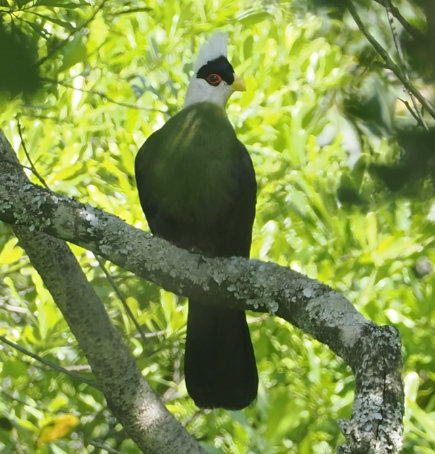
White-crested Turaco by Stephan lorenz

Kenya’s Mega Birding Tour delivered an extraordinary three week journey through virtually every major habitat the country offers, from coastal forests to vast savannas, arid reserves, high mountain forests, papyrus swamps and the Great Rift Valley lakes. More than 700 species were recorded alongside 60+ mammals, with unforgettable encounters throughout.

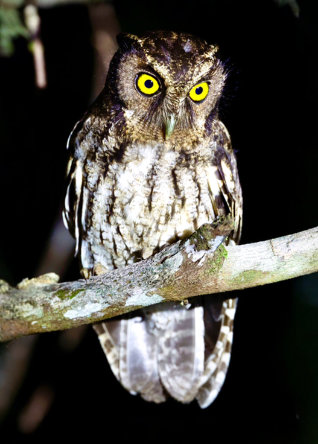
The adventure opened in the Shimba Hills with Fischer’s Turaco, Crowned Eagle, Trumpeter Hornbill, Mombasa Woodpecker, Green-headed Oriole, Eastern Nicator and Black-headed Apalis. Arabuko-Sokoke Forest added Sokoke Scops Owl, Scaly Babbler, Malindi Pipit, Bat-like Spinetail, Pale Batis, Amani Sunbird, Sokoke Pipit, Crab-Plover and Red-tailed Ant-Thrush. Moving toward Tsavo East, the group collected Coastal Cisticola and Zanzibar Red Bishop before entering the open savannas where Vulturine Guineafowl, Heuglin’s Bustard, Somali Courser, Somali Bee-eater, Pangani Longclaw and Violet-breasted Sunbird were among the many highlights.

The Taita Hills produced excellent encounters with Taita White-eye, Taita Thrush and the very local Taita Apalis, along with Hartlaub’s Turaco and Striped Pipit. Tsavo West offered Hartlaub’s Bustard, Brown-breasted Barbet, Pringle’s Puffback, Rosy-patched Bushshrike, Scaly Chatterer, Gorgeous Sunbird, Taveta Weaver and Blue-capped Cordonbleu, along with memorable sightings of Leopard, Lion and Verreaux’s Eagle-Owl.

On the Konza Plains, a full suite of larks included White-tailed, Sentinel, Short-tailed, Red-capped and Somali Short-toed Lark, plus Small Buttonquail and Temminck’s Courser. Mt. Kenya and surrounding areas yielded African Finfoot, Gray-olive Greenbul, Hinde’s Pied-Babbler, Northern Pied-Babbler, Olive Ibis, White-bellied Tit, Black-collared Apalis and Scaly Spurfowl. Meru National Park delivered Pel’s Fishing-Owl, Western Banded Snake-Eagle, Eastern Black-headed Batis, Black-bellied Sunbird, Red-throated Twinspot, and Green-capped Eremomela, along with African Scops-Owl at night.

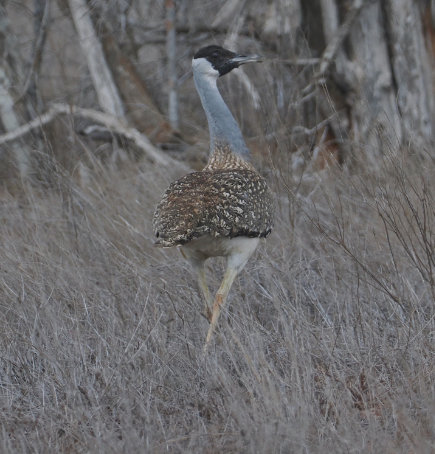
Heuglin’s Bustard by Stephan Lorenz
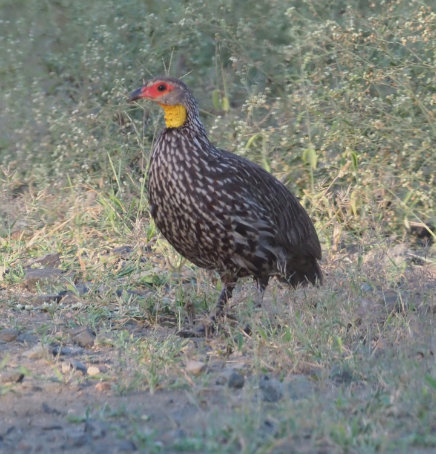
Yellow-necked Spurfowl by Stephan Lorenz
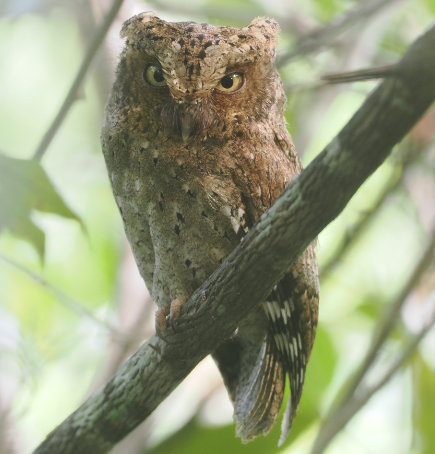
Sokoke Scops Owl by Stephan Lorenz

Shaba and Buffalo Springs provided a tremendous array of dry country specialties including Lichtenstein’s Sandgrouse, Somali Tit, Yellow-vented and Yellow-bellied Eremomela, Somali Crombec, Brown-backed Honeybird, Three-streaked Tchagra, Gambaga Flycatcher and White-headed Mousebird. The group enjoyed exceptional views of Golden Pipit, ranked among the tour’s top birds.

Highland birding in the Aberdares produced Abbott’s Starling, Aberdare’s Cisticola, Golden-winged Sunbird and Elgon Francolin. Kinangop grasslands added African Snipe, Levaillant’s Cisticola and Sharpe’s Longclaw. Lake Elementaita and Baringo delivered both flamingos, Allen’s Gallinule, Pink-backed Pelican, Northern Masked-Weaver, a suite of owls including Northern White-faced Owl, plus Jackson’s Hornbill, White-crested Turaco, Long-billed Pipit and Stripe-breasted Seedeater. A Lesser Jacana and Highland Rush Warbler were further highlights en route to Kitale.

In the Cherangani Hills, the group recorded Moustached Tinkerbird, Black-throated Wattle-eye, African Spotted Creeper, Sharpe’s Starling and Oriole Finch. Moving west, Kakamega Forest added Turner’s Eremomela, Eastern Bronze-naped Pigeon, Great Blue Turaco, White-headed Woodhoopoe, Golden-crowned Woodpecker, four wattle-eye species, Southern Hyliota, Uganda Woodland-Warbler, Brown-chested Alethe and Equatorial Akalat. Grey-chested Babbler, Black-billed Turaco, Blue-headed Bee-eater, Petit’s Cuckooshrike and Sharpe’s Drongo were further forest highlights.

The tour concluded along the papyrus swamps of Lake Victoria with Eastern Plantain-eater, Winding Cisticola, Sedge Warbler, Northern Brown-throated Weaver, Black-headed Weaver and Papyrus Gonolek, alongside Piapiac and Rock Pratincole. After more than three weeks and hundreds of species, Kenya lived up to its reputation as one of the finest birding and safari destinations on Earth.

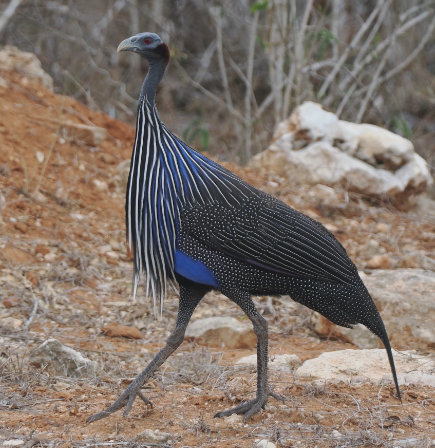
Vulturine Guineafowl by Stephan Lorenz
South Africa - Wildflowers, Birds & Wine, Comp and Mega - Wade Lee, Paul Josop, Julian Parsons

South Africa delivered an exceptional trio of spring journeys, each showcasing a different facet of the country’s natural richness. From the vibrant carpets of wildflowers and rugged arid landscapes of the west, to the elegant blend of Cape birding and wine country, and finally the sweeping biodiversity of the twenty two day Mega Birding Tour, these routes revealed an extraordinary array of birds, mammals and botanical treasures.

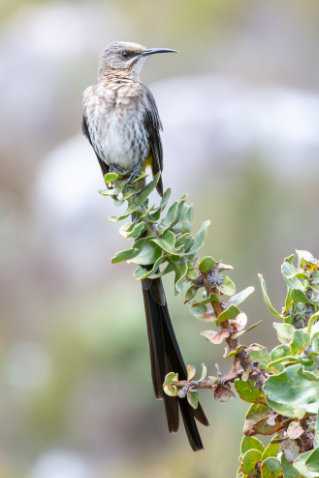
Cape Sugarbird by Julian Parsons
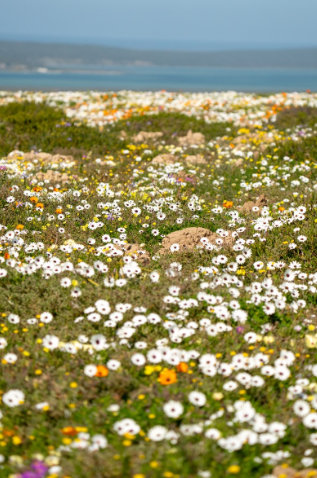
Wildflowers in West Coast NP by Paul Josop
Blue Pride-of Nieuwoudtville by Paul Josop
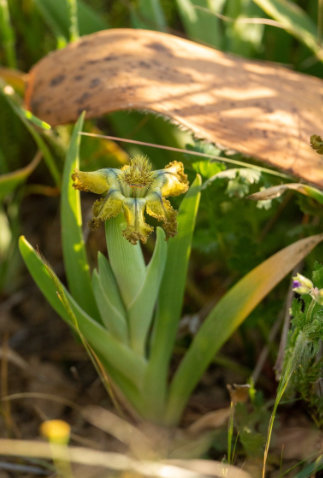
Sheathing Spiderlily by Paul Josop

The Cape Wildflowers, Birds and Big Game tour unfolded across the Fynbos covered Cape Peninsula, the flower rich Strandveld of the West Coast National Park and the stark beauty of Bushmanland and Namaqualand. Spectacular displays of King Protea, Pincushion Proteas, Blue Afrikaner, Harlequin Flower, Elegant Silklily, Sheathing Spiderlily, Babybottom Silverstone and Copper Fingerfig set the stage for equally memorable birding. Highlights included Cape Sugarbird, Orange-breasted Sunbird, Cape Rockjumper, Victorin’s Warbler, Cape Siskin, Southern Black Korhaan, Black Harrier, Grey-winged Francolin, Protea Canary, Karoo Scrub Robin, Bokmakierie, Ludwig’s Bustard, Pale-winged Starling and Namaqua Warbler. Mammal encounters ranged from Common Eland and Bontebok to Meerkat, Mountain Zebra and Klipspringer, while a waterpoint near Aggeneys produced Pygmy Falcon beside a bustling Sociable Weaver colony.

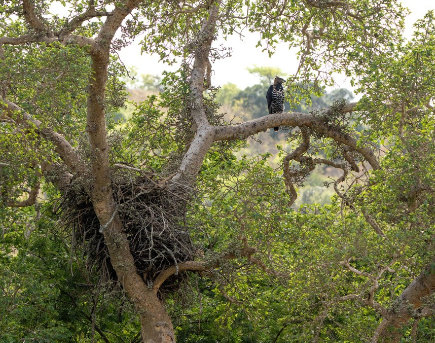
Crowned Eagle at Nest by Paul Josop
Bush Blackcap by Julian Parsons
Pink-throated Twinspot by Julian Parsons

The Birds, Wine and Big Game tour paired classic Cape birding with world class wineries before shifting to the wildlife rich reserves of Zululand. Kirstenbosch and the Cape forests delivered Cape Spurfowl, Cape Batis, Cape Sugarbird, Orange-breasted, Malachite and Amethyst Sunbirds, Forest Canary, Rameron Pigeon and Spotted Eagle Owl on a nest. Strandfontein added Cape Teal, Maccoa Duck, Southern Pochard, African Swamphen and Greater Flamingo, while West Coast National Park produced Southern Black Korhaan, Black Harrier, Karoo Scrub Robin, Grey-winged Francolin and Blue Crane. Crossing the country brought the group to Manyoni Private Game Reserve, where outstanding sightings of Leopard, Lions, White Rhinos, African Elephants and Cape Buffalo accompanied notable birds including Secretarybird, Crowned Eagle, Wahlberg’s Eagle, Pink-throated Twinspot, Neergaard’s Sunbird, White-crested Helmetshrike, Gorgeous Bushshrike and African Pygmy Kingfisher. A chilly but productive day at Mkuze added Bearded Scrub Robin, Martial Eagle, White-throated Robin-Chat, White-fronted Bee-eater and Pel’s Fishing Owl.

The South Africa Mega Birding Tour stitched together nearly every major biome of the country across twenty two days, producing an exceptional suite of endemics, specials and regional rarities. From a flyby Blue Swallow on day one to Alpine specialists atop Sani Pass such as Drakensberg Rockjumper, Gurney’s Sugarbird, Bearded Vulture, Barratt’s Warbler and Fairy Flycatcher, the journey opened with unforgettable highland birding. Forests around Bulwer and Eshowe offered Cape Parrot, Knysna Turaco, Narina Trogon, African Green Pigeon, Crowned Eagle, Bush Blackcap and Spotted Ground Thrush. The coastal forests and wetlands of St Lucia delivered Livingstone’s Turaco, African Cuckoo Hawk, African Wood Owl, Fiery-necked Nightjar, Woodward’s Batis, Rudd’s Apalis, Green Twinspot and Saddle-billed Stork.

Further north, the wetlands and sand forests surrounding Hluhluwe and Mkuze produced Collared Pratincole, Senegal Lapwing, Black Heron, Broad-billed Roller, Lesser Spotted Eagle, Pink-throated Twinspot, African Savannah Elephant, Suni and Nyala. Grasslands around Wakkerstroom delivered Blue Korhaan, White-bellied and Denham’s Bustard, Eastern Clapper, Spike-heeled and Eastern Long-billed Larks, Quailfinch, Yellow-crowned Bishop and African Rail. The arid interior around Kimberley and Mokala showcased Secretarybird, Southern Yellow-billed Hornbill, Crimson-breasted Shrike, Kalahari Scrub-Robin, Black-faced Waxbill, Melodious Lark, Sable Antelope and Aardwolf on a night drive.

Southern Yellow-billed Hornbill by Julian Parsons

The western leg toward Calvinia and Port Nolloth brought Dune (Barlow’s) Lark, Tractrac Chat, Karoo and Cape Long-billed Lark, Black Harrier and Sclater’s Lark, while the return to the Fynbos biome produced Cape Rockjumper, Black Harrier, Southern Black Korhaan, Verreaux’s Eagle and Protea Canary. Forests of the Overberg added Knysna Woodpecker, Blue mantled Crested Flycatcher, Victorin’s Warbler and Swee Waxbill, while the trip concluded around Cape Town with African Penguin, Rock Hyrax, Cape Sugarbird, Cape Grassbird, Spotted Eagle Owl and Booted Eagle.
Together, these three tours showcased South Africa’s extraordinary diversity from flower rich fynbos and dramatic mountain passes to sweeping wetlands, coastal forests, acacia savannas and desert plains. A superb season of birding filled with iconic endemics, charismatic mammals, remarkable landscapes and unforgettable highlights across one of the world’s richest natural destinations.

TAILOR-MADE TOUR HIGHLIGHTS

Madagascar - Keith Valentine, Glen Valentine & Rob Williams
Pitta-like Ground Roller by Rob Williams
Scaly Ground Roller by Glen Valentine
Long-tailed Ground Roller by Rob Williams

Our tailormade team were busy this year in Madagascar with three private tours underway through September, October & November. The rains had come at the expected time, unlike last year, and all the key species were in good breeding dress and setting up territories. Ground Rollers are always going to be the stars of the Madagascar show and this year our groups enjoyed wonderful encounters with all five species! Other desirable groups such as the monotypic Cuckoo-roller, the asities, vangas, couas, and mesites all offered up some incredible viewing opportunities with highlight species including Velvet and Schlegel’s Asities, Subdesert, Brown and White-breasted Mesites, Sickle-billed, Van Dam’s, Pollen’s, Nuthatch, Madagascar Blue, Red-shouldered and Crossley’s Vangas and Red-breasted, Giant, Verreaux’s and Running Couas. The unique Crab-plover is another sought-after species in Madagascar, especially for family listers and this year some big numbers were present at the Betsiboka Delta with smaller groups on Nosy Ve.

Some of the other top quality birds to be seen on our tailormade tours this year included Collared Nightjar at Analamazoatra, Madagascar Sandgrouse at Berenty, Madagascar Forest Rail at Analamazoatra and Ranomafana, Madagascar Buttonquail at Berenty, Ifaty and Ankarafantsika, Madagascar Plover at Ifaty, Madagascar Jacana at Ankarafantsika, Madagascar Pratincole at the impressive Betsiboka River crossing, Madagascar Ibis at Analamazoatra, Malagasy Pond Heron at Lac Alarobia and Lac Ravelobe, Madagascar Fish Eagle at Lac Ravelobe, White-browed Owl at Berenty and Madagascar Owl at Analamazoatra, Banded Kestrel at Zombitse and Ankarafantsika, Madagascar Yellowbrow at Ranomafana, Appert’s Tetraka at Zombitse, and Forest Fody at Ranomafana.

Velvet Asity by Rob Williams
Sickle-billed Vanga by Keith Valentine
Madagascar Forest Rail by Glen Valentine
Madagascar Fish Eagle by Keith Valentine
Madagascar Ibis by Rob Williams
Verreaux's Sifaka by Rob WIlliams

The lemurs, as usual, grabbed the headlines for many with an exceptional twenty-six species recorded. These included the impressive singing Indris, gentle Diademed, Milne-Edward’s, Verreaux’s and Coquerel’s Sifakas, Golden and Eastern Grey Bamboo Lemurs, Ring-tailed, Red-collared Brown and Red-bellied Lemurs, Eastern and Western Avahis (Woolly Lemurs), Goodman’s, Golden-brown, Grey, Rufous and Grey-brown Mouse Lemurs, Fat-tailed and Crossley’s Dwarf Lemurs, Black-and-white Ruffed Lemur, and Milne-Edward’s, Petter’s, White-footed and Zombitse Sportive Lemurs. While other great mammals included Lesser Hedgehog Tenrec and Malagasy Flying Fox.

Parson's Chameleon by Glen Valentine
Baron's Mantella by Keith Valentine

Our reptile and amphibian lists were also well stocked with over sixty species recorded. Just some of the highlights included the two largest chameleons in the world – Parson’s and Oustalet’s and some of the smallest like the Brown Leaf Chameleon belonging to the Brookesia genus. Dumeril’s and Madagascar Tree Boas, Blonde Hog-nosed Snake, Mahafaly Sand Snake, Malagasy Cat-eyed Snake, Satanic Leaf-tailed Gecko, Baron’s Mantella and the critically endangered Southern Spider Tortoise were additional highlights.

Oman & UAE - Forrest Rowland
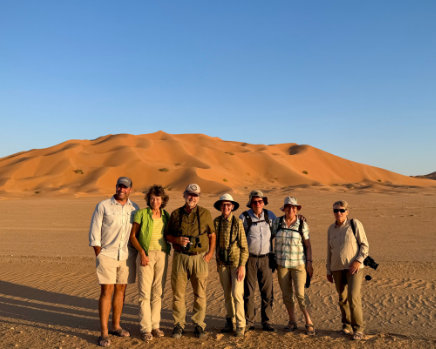
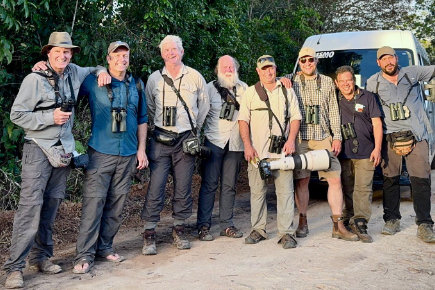
Rockjumper group in Oman
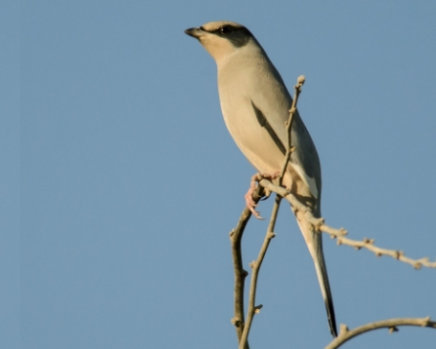
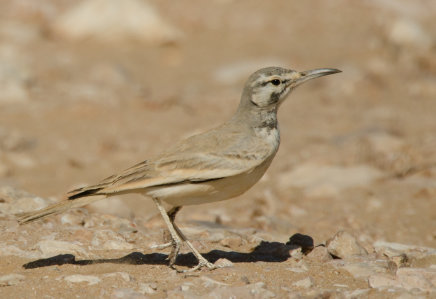
Grey Hypocolius by Forrest Rowland
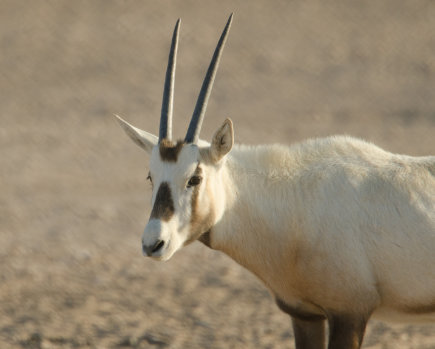
Arabian Oryx by Forrest Rowland

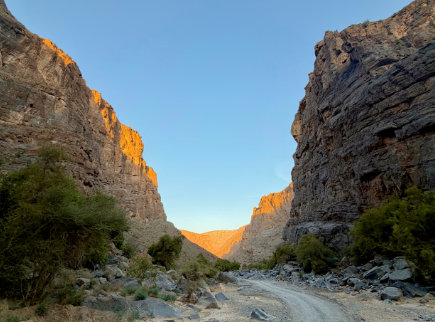
Our recent tailormade tour of Oman and UAE was arguably our most successful to date. From a naturalist’s standpoint, Oman is a meeting place. It has its own mountain ranges, hosting endemic flora and fauna, while being placed at the intersection of Asian and African avifaunal influence. There are few places in the World that supply so many surprises in one single tour, especially considering what most expect to be resource-poor and low-diversity habitats. The ground truth is far from expectation in all the best ways. Combine these natural factors with a welcoming, proud, stable culture and society that lacks for little and you have one of the friendliest, most inviting destinations for the traveling birder and naturalist, on Earth.

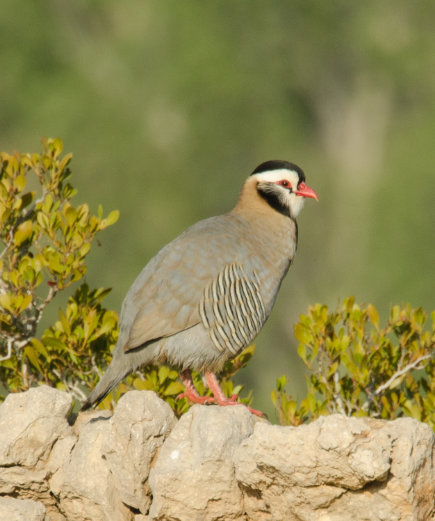
Arabian Partridge by Forrest Rowland
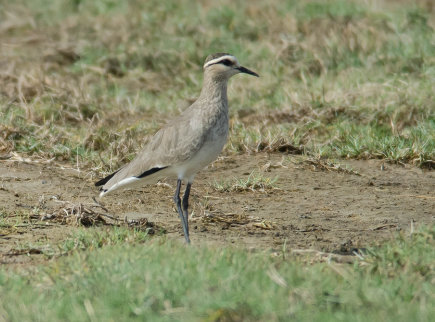
Sociable Lapwing by Forrest Rowland
Scenery

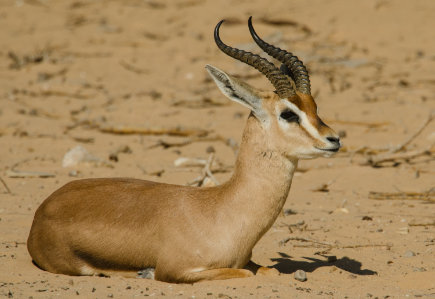
Our adventure began in Dubai, the planet’s most recognizable metropolis. Unfortunately, Forrest missed day 1 due to the US government shutdown. Thankfully everyone still got out and found a nice variety of birds plus some great mammals including Arabian and Sand Gazelles, and the gorgeous Arabian Oryx. During our remaining two full days in the UAE, we focused on the area around Al Ain where we had some excellent views of the prize species of the mountain – Sand and Arabian Partridges and Hooded and Hume’s Wheatears, while other much-wanted target birds like Plain Leaf Warbler, Red-tailed (Persian) Wheatear, Eastern Orphean Warbler, Menetrie’s Warbler, Long-billed Pipit, and the scarce Variable Wheatear were also seen.

We then headed into one of the most unique and interesting countries I have had the pleasure to explore – the Sultanate of Oman. Oman has a way of surprising people, which has as much to do with stereotypes and relative ignorance of Eastern Arabia, as anything the country has done. However, renegotiating oil contracts to provide free education through college, free healthcare, and an enviable minimum living wage for its citizens is certainly novel and intriguing. Also protecting cultural heritage and traditions of the various native tribes and more ancient societies that called its territory home over the past two centuries has had a remarkable impact as well. The streets are wide, clean and orderly. The people are friendly and welcoming. We were invited to no fewer than five dinners by complete strangers during our time touring the country. The food and service  is  fantastic, and the country has among the lowest crime rates on Earth. In short, Oman is simply a fabulous place to visit, and that’s not even accounting for the diverse and stunning landscapes, diverse flora and fauna, and effortless travel. We spent 9 joyous days in Oman and could’ve had another 9!

The birding highlights were numerous and we kicked things off with two difficult species – Sykes’s Warbler and Pallas’s Gull. The Hajar Mountains, rising to over 13000 feet in elevation, trap enough moisture to be lightly wooded above 9000 feet and this area was our focus for some great night birding where we heard Omani Owl and had great views of Pallid Scops Owl, Eurasian Nightjar, Pharoah Eagle Owl, and the uber-rare Blanford’s Fox.

Greater Hoopoe-Lark by Forrest Rowland
Arabian Gazelle by Forrest Rowland
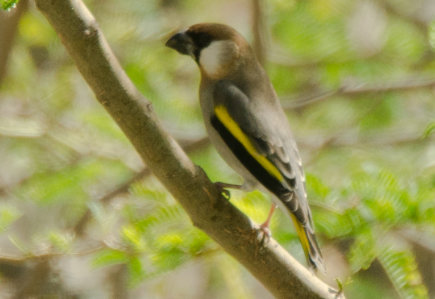
Arabian Golden-winged Grosbeak by Forrest Rowland

Our time high up the mountains at Jabal Akhdar produced great views of the monotypic Streaked Scrub Warbler, which is a family unto its own. We then headed across the desert visiting several ‘green’ spots on route. Rarities like White-breasted Waterhen and Hume’s Warbler were found and we also had amazing views of some target residents like Cream-colored Courser, Greater Short-toed Lark, and Asian Desert Warbler. A hot tip then saw us enjoying an amazing sighting of six Egyptian Nightjars congregating at a site in Maqshin plus a single Sykes’s Nightjar, an extremely rare bird for the area.

Other top highlights during the tour included Grey Hypocolius, another monotypic family, the endangered Sociable Lapwing, Little Crake, Bimaculated Lark, Turkestan Short-toed Lark, hundreds of Greater Short-toed Larks, Greater Hoopoe Lark, Bar-tailed Lark, Desert Lark, Black-crowned Sparrow-Larks, Arabian and Steppe Grey Shrikes, Spotted and Crowned Sandgrouse, Arabian Grosbeak, Arabian Warbler, Arabian Wheatear, Arabian Eagle Owl, Arabian Scops Owl, Desert Owl, Forbes-Watson’s Swift, Yemen Serin, Ruppell’s Weavers, Tristram’s Starling, Short-toed Snake Eagle, and the gorgeous Nile Valley Sunbird. We also had high numbers of Booted, Steppe, Imperial, Greater Spotted, and Bonelli’s Eagles on the tour! A pelagic trip was also a great success with Sooty Gulls, Persian Shearwaters, a Flesh-footed Shearwater, Jouanin’s Petrel, and an 11th hour Swinhoe’s Storm Petrel! Vagrants are always a wonderful and unexpected highlight of a trip to Oman, and we enjoyed some amazing species this year. Common Cuckoo, Yellow-browed Warbler, Oman’s 6th record of Common Hawk Cuckoo, Bay-backed Shrike, Medium Egret, Oman’s 3rd Fulvous Whistling-Duck, Small Pratincole, Watercock and an immature Yellow Bittern!

Namibia - Ryan Tyrer
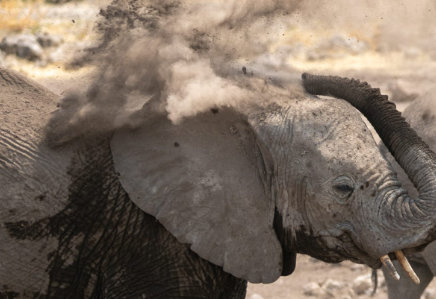
African Elephant by Ryan Tyrer
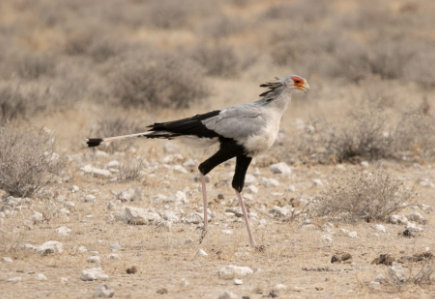
Secretarybird by Ryan Tyrer
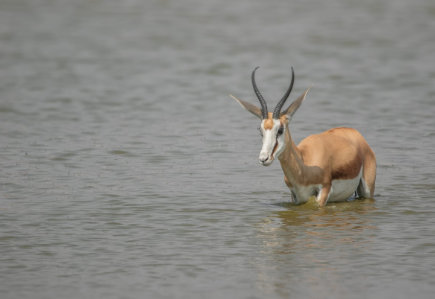
Springbok by Ryan Tyrer

During August and September Ryan found himself leading two back-to-back tours through Namibia. This is prime time for endemic birding and mammal viewing and both trips were exceptionally successful. Namibia’s scenery is another major drawcard, and the wide-open spaces and natural rugged beauty hold great appeal. Key sites across this multi-country tour included iconic Etosha National Park, the endemic-rich Erongo Mountains, Walvis Bay, the Waterberg Plateau, and the vast Namib Desert.

The region’s localised endemics were particularly showy, and the groups had some excellent views of specials like Ruppell’s Korhaan, Herero Chat, Monteiro’s and Damara Red-billed Hornbills, Dune and Gray’s Larks, Ruppell’s Parrot, White-tailed Shrike, Violet Wood Hoopoe, Bare-cheeked and Black-faced Babblers and Rockrunner.

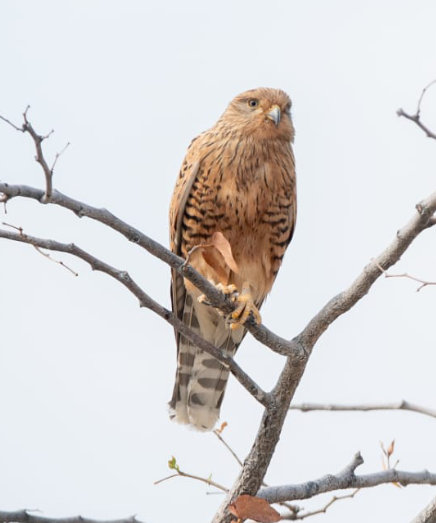
Greater Kestrel by Ryan Tyrer
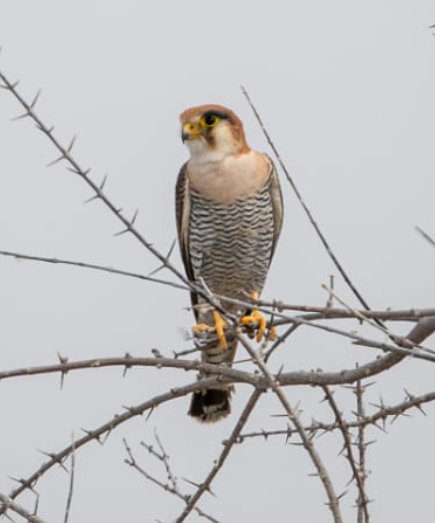
Red-necked Falcon by Ryan Tyrer
Red-crested Korhaan by Ryan Tyrer

Etosha is always a major highlight, and this world-renowned national park boasts a variety of incredible bird and mammal species. From Lion, Leopard, Cheetah, African Elephant and Black and White Rhinoceros to a variety of incredible birds Etosha is a wonderful place to explore. On each trip we enjoyed five nights at three different camps and lodges, allowing us to explore the breadth of the park’s habitat diversity. Okaukuejo Camp was a wonderful place to spend the evenings after dinner as the waterhole was very productive with multiple elephant and giraffe come down to drink. However, the highlight at this camp was the numerous Black Rhino that visited the waterhole. At one point there was no less than eleven animals! Other highlights at Etosha included species like Secretarybird, Martial Eagle, Red-necked Falcon, Burchell’s and Namaqua Sandgrouse, Burchell’s Courser, Red-crested and Northern Black Korhaans and the worlds heaviest flying bird, the Kori Bustard.

Malaysia & Borneo - Daniel Danckwerts
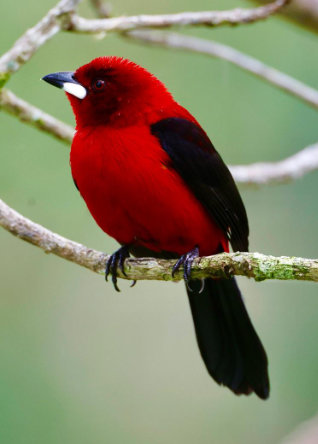
Black-crowned Pitta by Daniel Danckwerts
Bornean Ground Cuckoo by Daniel Danckwerts
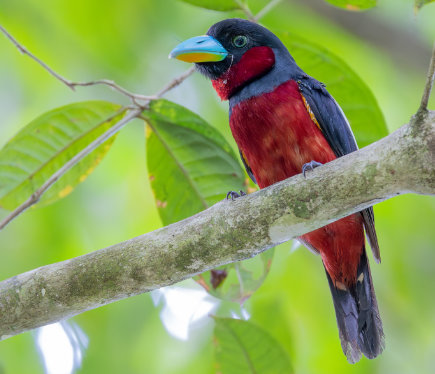
Black-and-red Broadbill by Daniel Danckwerts
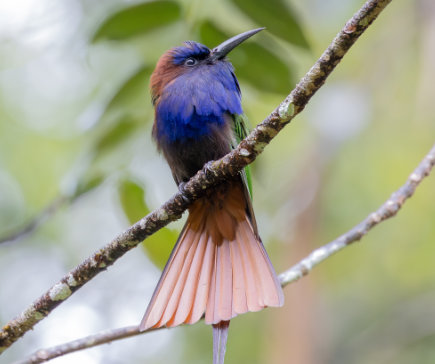
Purple-bearded Bee-eater by Daniel Danckwerts

Our journey through Peninsular Malaysia and Borneo was a richly rewarding adventure, covering some of Southeast Asia’s most beautiful and biodiverse landscapes. From the cool, forested slopes of Bukit Tinggi, where Ferruginous Partridge, Mountain Peacock-pheasant, and even a shy Rail-babbler stole the show, to the vast lowland forests of Lenggor, we experienced a wonderful mix of tropical habitats and wildlife. Borneo then took our adventure to another level, with the montane forests of the Crocker Range and Mount Kinabalu producing a suite of endemics including the Whitehead’s trio of broadbill, trogon and spiderhunter, Bare-headed Laughingthrush, Fruithunter, and Crimson-headed Partridge. In the lowlands of Sepilok and Danum Valley, Bornean Ground Cuckoo, several dazzling pittas, broadbills, trogons, and unforgettable encounters with wild Orangutans and Tarsiers made for lasting memories; the perfect finale to an exceptional main tour.

Our short extension to Java and Sulawesi offered a fitting encore, beginning with a rewarding stop at Muara Angke and Jakarta Bay for rare and range-restricted species like Christmas Island Frigatebird and Milky Stork. From there, Sulawesi’s wild beauty and extraordinary endemism stole the spotlight. Three full days in Lore Lindu National Park delivered an incredible range of specialties, from the stunning Purple-bearded Bee-eater and Malia to the enigmatic Geomalia and Hylocitrea, alongside thrilling nocturnal outings for Sulawesi Masked Owl and Diabolical Nightjar. A spectacular conclusion to a tour that celebrated the immense diversity, colour, and wonder of the Malay Archipelago.

MENTIONS

David Hoddinott's 7000th Bird

Earlier this year we had an incredible NE Brazil tour, targeting the many endangered & threatened birds of the region. There were too many highlights to mention all, but some include an outstanding experience with Lear’s Macaw. Over 100 Brazilian endemics seen. Spectacular Banded Cotinga! The extremely localized Araripe Manakin, amazing hummingbirds including Ruby Topaz, Hooded Visorbearer & Horned Sungem, Great Xenops, Swallow-tailed Cotinga, Bahia Tapaculo and so much more. I was also fortunate to reach my 7000th world bird on the tour, the beautiful White-winged Cotinga! I’m very much looking forward to going back.

David Hoddinott
White-winged Cotinga by Adam Riley
Social Media

Team Rockjumper’s social media is as bold as ever. We share photos, videos, sightings, stories, and exciting news through Facebook, X, YouTube, Instagram and more! Follow us to stay in touch and see what’s happening in the Rockjumper world in real time!

Gear, books, gift certificates and more on our online shop!

At Rockjumper we know that having the right gear for the destination is crucial. Whether it be comfortable clothing, birding accessories, binoculars, scopes or the most relevant field guides, we have you covered. Our friendly staff are always happy to weigh in with advice and you will find a number of handy items to enhance your travel experience.

We have added new shirts to our online store featuring key bird families! These shirts highlight some of our most iconic groups of birds and make excellent gifts for fellow birders or a great addition to your own wardrobe.

Loyalty Programs

BACK-TO-BACK DISCOUNT

Any guests who sign up for two back-to-back tours, we will deduct US$300 off the total price.

More information

EARLY BIRD DISCOUNT

A 10% Early Bird Discount will be awarded to any guest who books one of the first spaces on a tour 12 months in advance.

More information

REFERRAL DISCOUNT

A US$400 discount voucher is awarded to any of our loyal guests who refer someone who has not travelled with us before, provided the referred person signs up for one of our scheduled departures.

More information

FIFTH TOUR DISCOUNT

Any guests who sign up for their 5th tour with us will be offered a 10% discount off the tour price, to a maximum value of US$1000.

More information

Webinars

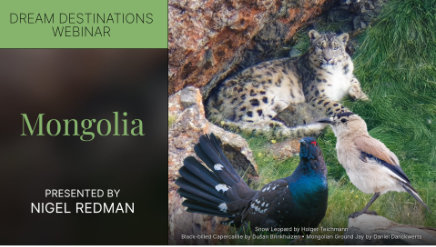
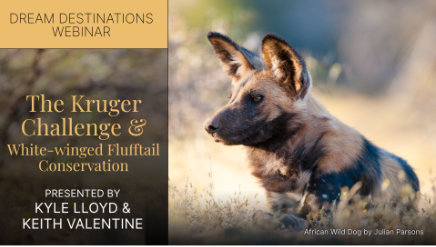
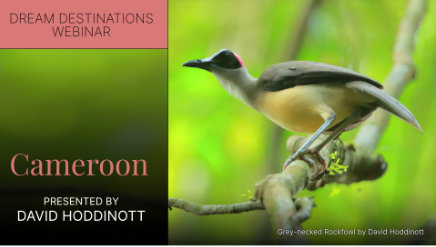
Our most recent webinar was Mongolia by Nigel Redman. This spectacular overview covers one of Asia’s most unique birding and wildlife destinations. Next year we will continue to feature a wonderful selection of destinations so look out for our notifications.

If you missed a webinar or simply want to revisit the destination all of our webinars are uploaded to YouTube shortly after completion. Feel free to browse through some of our most recent webinars here.

Adam Riley in Brazil

This October Rockjumper’s Founder Adam Riley, together with a group of friends and fellow Rockjumper Tour Leaders David Hoddinott and Tuomas Seimola visited the ultra-diverse region of NE Brazil. Famous for its vast array of mega specials and rare endemics their trip produced an extraordinary variety of the regions very best and most beautiful birds. If you haven’t had the opportunity to visit NE Brazil yet we couldn’t recommend it more highly.

Adam Riley in Chapada Diamantina
Atlantic forests by Adam Riley
Group in Brazil
Little Wood Rail by Adam Riley
White-browed Guan by Adam Riley
Band-tailed Manakin by Adam Riley
Caatinga Puffbird by Adam Riley
Mangrove Rail by Adam Riley
Caatinga Parakeet by Adam Riley

Fortaleza in the north was their starting point with the first key site being Icapui. This area of mangroves and coastal bush produced the special Little Wood Rail and Mangrove Rail while the first Jandaya and Caatinga Parakeets were also found. Guaramiranga’s beautiful forests then produced many great species including the endangered Grey-breasted Parakeet. Others such as the striking Band-tailed Manakin, Ochraceous Piculet, Ceara Gnateater, White-browed Guan and Caatinga Puffbird were also enjoyed. Moving further south to Quixada the specials continued to flow with caatinga targets such as Pygmy Nightjar, White-naped Jay and Ochre-backed Woodpecker. Further south and more caatinga specials continued to show well with Great Xenops, Spotted Piculet, Campo Troupial and Silvery-cheeked Antshrike. A new site was then explored and produced the mega Moustached Woodcreeper while further Broad-tipped Hermit was another highlight.

Moustached Woodcreeper by Adam Riley
Araripe Manakin by Adam Riley
Lear’s Macaw by Adam Riley

The next day would produce one of the region’s most spectacular targets – the beautiful Araripe Manakin. Discovered in 1996 the Araripe Manakin is still only known from an extremely small area in NE Brazil and is one of the most decorated of all the regions birds. As if the manakin wasn’t enough the following day yielded another of NE Brazil’s most sought-after species – Lear’s Macaw. This impressive bird was an avian mystery for over a century. And while it was known from specimens and even live birds in the 1800s, the locations were only listed as ‘Brazil’. After extensive searches Lear’s Macaw was finally rediscovered in 1979 when it was nearly extinct with less than 100 known individuals. After concerted conservation efforts the numbers are up to about 2000 but just at a few remote cliff side breeding colonies.

Hooded Visorbearer by Adam Riley
Gilt-edged Tanager by Adam Riley

Next on the adventure was the scenically spectacular Chapada Diamantina area which also holds a plethora of NE Brazilian endemics and several more must see species. High on that list is the Hooded Visorbearer a spectacular hummingbird with a small distribution. We had some fabulous views of this dry country gem! Other highlights included Sincora Antwren (only described in 2007!), Gilt-edged Tanager and Grey-backed Tachuri. Later around Mucuge the newly described (2007) Diamantina Tapaculo was seen very well and we also enjoyed the spectacular Horned Sungem and finally the rare and difficult Sao Francisco Sparrow.

Ruby Topaz by Adam Riley
Sincora Antwren by Adam Riley
Diamantina Tapaculo by Adam Riley
Slender Antbird by Adam Riley
Horned Sungem by Adam Riley
Stripe-breasted Starthroat by Adam Riley
Sao Francisco Sparrow by Adam Riley
Three-toed Jacamar by Adam Riley

Boa Nova is a birding paradise with an incredible habitat variety and as is almost always the case in NE Brazil, many rare and endangered species. We thoroughly enjoyed the hummingbird gardens where Ruby Topaz, while rather widespread, stole the show with amazing views. We also nailed the endemic Stripe-breasted Starthroat and several others like Swallow-tailed hummingbird, Sapphire-spangled Emerald and Planalto Hermit. The range-restricted Slender Antbird is one of the regions flagship species for conservation and we enjoyed excellent views while other highlights from the area included Narrow-billed Antwren, Small-billed Tinamou, White-bibbed Antbird, Three-toed Jacamar, Wied’s Tyrant-Manakin and Atlantic Black-throated Trogon. Further south and east we enjoyed many additional Atlantic Rainforest specials like Swallow-tailed Cotinga, White-eared and Golden-capped Parakeets, Pink-legged Gravateiro, White-winged Cotinga (David Hoddinott’s 7000th species!), Yellow-faced Siskin and Brazilian Tanager.

Bahia Treehunter by Adam Riley
Swallow-tailed Cotinga by Adam Riley

We were also treated to another of NE Brazil’s most gorgeous and rare species, the Banded Cotinga. This stunning bird is sadly critically endangered due to habitat loss however our tours to the area have an excellent track record for finding it. Serra Bonita then produced some more fine specials with the still undescribed ‘Bahia’ Treehunter, Spot-billed Toucanet, Red-necked Tanager, Brown Tinamou and Black-throated Grosbeak all being highlights.’

Our final site on the tour was near Porto Seguro which yielded several more top-class species such as Hook-billed Hermit, Black-capped Screech Owl and Black-headed Berryeater. In total we recorded 520 species but the ultimate goal was finding the rare endemics and did they ever deliver!

Hook-billed Hermit by Adam Riley
Black-capped Screech Owl by Adam Riley
Banded Cotinga by Adam Riley
Brazilian Tanager by Adam Riley

PARTNERS

In 2026 we have a variety of excellent conservation tours on the schedule. These are being offered together with several of our key affiliates including the Houston Audubon Society, The Wildlife Society, ZEISS, the African Bird Club and the Oriental Bird Club. All these organisations are excellent ambassadors for conservation, and we are excited about the destinations being featured. We invite you to view the tours on offer below and if any of them perk your interest please get in touch with our tailormade team who will be very happy to assist – tailormade@rockjumper.com

ZEISS - Ecuador

This specially crafted itinerary explores the threatened Choco forests of NW Ecuador where many stunning endemics can be found while an extension into the Amazon unlocks another world of beauty and diversity. Dušan Brinkhuizen, lead guide for the trip, is one of our most popular tour leaders and is looking forward to birding with you through these incredible localities. Come and enjoy some of South America’s and Ecuador’s most iconic species like Giant Antpitta, Andean Condor, Sword-billed Hummingbird, White-capped Tanager, Crescent-faced Antpitta, and Long-wattled Umbrellabird. We stay at many lovely lodges along the route, where the hummingbird and tanager feeders provide hours of entertainment.

Ecuador – Northwestern Specialities – ZEISS joint-partnership

10 – 23 Nov 2026 (14 days)

Tour Price: USD6,750

Tour Leader: Dušan Brinkhuizen

Ecuador – Amazon Extension – ZEISS joint-partnership

23 – 28 Nov 2026 (6 days)

Tour Price: USD3,850

Tour Leader: Dušan Brinkhuizen

Andean Cock-of-the-rock by Lev Frid
Przevalski's Finch by Dubi Shapiro
Oriental Bird Club - China, Sichuan

This guaranteed departure has been perennially successful and is one of the best regions on Earth to enjoy much-loved bird families like pheasants and parrotbills. We also stand excellent chances of seeing some great mammals including Red Panda. This is the second year in a row that we have offered this special fund-raising trip, together with the Oriental Bird Club, and we are very excited for next year’s departure.

China – Sichuan Birding – Oriental Bird Club sponsor 

10 – 28 Apr 2026(19 days) 

Tour Price: USD6,795 

Tour Leader: Rob Williams 

Only 2 Spaces Available 

African Bird Club - Kenya

This unique conservation tour focuses on several of Kenya’s key endemics and most threatened habitats. Iconic species include Sokoke Scops Owl, Sokoke Pipit, Kilifi Weaver, Amani Sunbird and the suite of endangered Taita Hills endemics – white-eye, thrush and apalis. The overall species list will be staggering in addition to the specials on show. Enjoy this trip while knowing that you are contributing to a worthwhile conservation cause.

Kenya – African Bird Club sponsor 

02 – 11 Jun 2026(10 days) 

Tour Price: USD4,750 

Tour Leader: Julian Parsons 

Only 4 Spaces Available 

Sokoke Scops Owl by Daniel Danckwerts
Tufted Coquette by Adam Riley
Houston Audubon Society - Trinidad & Tobago

We are very excited about our brand-new partnership with the Houston Audubon Society. Their passion for conservation aligns with Rockjumper’s core values and since their founding in 1969 they have been a key conservation society for protecting birds and their habitats in the Greater Houston Gulf Coast region. We are delighted to announce our first conservation tour with them is to Trinidad & Tobago. Two stunning tropical islands in the West Indies that offer a fabulous introduction into the mouth-watering bird families of the neotropics. Staying at the famous Asa Wright Nature Centre gives us access to the incredible feeders while we also have special access to see the unique Oilbirds among many other fantastic species!

Trinidad – Relaxed Tropical Island Birding –
Houston Audubon Society 

15 – 22 Jul 2026(8 days) 

Tour Price: USD5,950 

Tour Leader: Forrest Rowland 

Tobago Extension – Relaxed Tropical Island Birding –
Houston Audubon Society 

22 – 25 Jul 2026 (4 days) 

Tour Price: USD1,950 

Tour Leader: Forrest Rowland 

The Wildlife Society

Founded in 1936, The Wildlife Society is an international network of over 11,000 leaders in wildlife science, management and conservation who are dedicated to excellence in wildlife stewardship. We are thrilled to announce that we will be partnering with The Wildlife Society featuring two amazing experiences to Brazil and Ecuador in 2026. All tours will be led by popular Rockjumper leader Dušan Brinkhuizen, who resides in Ecuador, and has a wealth of knowledge and experience to share.

Ecuador – Northern (Choco Cloud Forest & Eastern Andes): The Wildlife Society

13 – 26 Jun 2026(14 days) 

Tour Price: USD6,950 

Tour Leader: Dušan Brinkhuizen 

Ecuador – Northern (Amazon Ext): The Wildlife Society

26 Jun – 04 Jul 2026 (9 days) 

Tour Price: USD4,495 

Tour Leader: Dušan Brinkhuizen 

Brazil – Pantanal: The Wildlife Society 

14 – 22 Sep 2026(9 days) 

Tour Price: BRL38,995 (USD7,028) 

Tour Leader: Dušan Brinkhuizen 

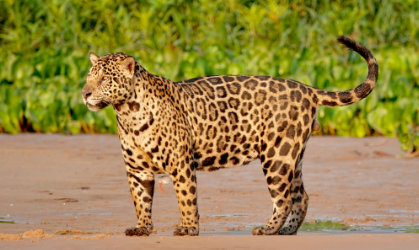
Jaguar by Bobby Wilcox
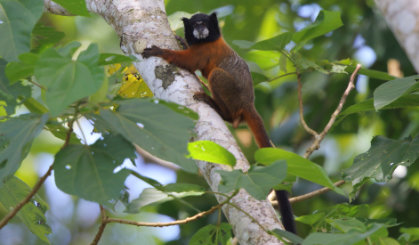
Golden-mantled Tamarin by Adam Riley

TESTIMONIALS

Lev is an excellent guide. This is my second time traveling with him. His ability to remain calm under pressure is second to none. Additionally, Lev rolled with the punches that PNG dealt out on a regular basis. He adapted on the fly and communicated clearly. Lev managed the group dynamics expertly, navigating different abilities to sight birds and different expectations for how to bird in a group. One could never tell if he had favorites among the group because Lev was pleasant to all. He persisted and kept the group morale in view at all times. – AB, Papua New Guinea – Birding in Paradise II 2025

Wonderful tour! Many great views of beautiful birds and mammals. Glen was wonderfully patient at getting everyone on the bird. The chimp trek was amazing and the gorilla trek incredible! As a bonus, we even encountered an unhabituated gorilla on our swamp trek the following day. Also very impressed with the UWA rangers and local guide. The porters provided an indispensible service as well, especially on the gorilla trek. – LF, Uganda – Birds & Gorillas (Small Group) 2025

The tour was excellent, very well organised and very productive! Accomodations were of excellent standard and transportation seamless. David was organised, helpful and clear both in the field and during down time. The pace was relaxed and I enjoyed the itinerary immensely. I think we were very blessed to have sightings of the rarer animals. The group was friendly and got on well even though there were no specific instructions to rotate on the bus or trails. Tour is Highly recommended! – LL, Brazil – Pantanal: Birds & Wildlife II 2025

I thoroughly enjoyed the 2025 Birds and Snow Leopards tour with Peter Kaestner. My life list grew by 62 birds (favorites included Little Owl, Sakar Falcon, and rare Siberian White Crane), and, yes, we did see the Snow Leopard, as well as all the other major large mammals, including Argali, Ibex, Saiga, Wapiti, Wild Horse and Grey Wolf. Most of the birds and mammals were too distant to see well with binoculars, but Peter and our other guide, Istvan, set up scopes and were very patient in assuring that everyone got a good view. In Hustai National Park, I photographed Red Deer that could be added to the Rockjumper list. On a post-tour visit to the Natural History Museum in Ulaanbaatar, I saw all the birds and animals up close, not live but a nice supplement to the real thing. The accommodations in the ger camps were surprisingly comfortable for “camping.” I give special appreciation to the kitchen staff, who prepared for me delicious vegetation meals. It was a special treat to be served hot lunch at over 10,000 feet, as we sat looking for the Snow Leopard. The drivers are also to be commended for their skill in negotiating the rough mountain roads and quickly fixing a flat tire as we raced up to the Snow Leopard. Thanks to Peter and all the Rockjumper staff who made Mongolia such a memorable experience. – KH, Mongolia – Birds & Snow Leopards 2025

This is an outstanding tour which showcases many geographical sites, wonderful birds and some fantastic mammals. Etosha NP is a jewel but so are several other places we visited, notably Erongo. Our lodges were all really comfortable and some were superb. Julian is an outstanding guide: very knowledgeable, pleasant, and committed to making his guests have an exceptional time. We have done a lot of trips with Rockjumper but this is certainly one of the very best and I recommend it very highly. – RL, Namibia, Okavango & Victoria Falls Overland (Small Group) III 2025

birding tour operator

Stephan is very organized and shows great respect for each client’s needs and wanted birds. Stephan tries very hard to get all clients on each and every bird and asks to ensure that all views are satisfactory. Stephan has a lot of energy, which is contagious and great to see. – AF, Bolivia – Remote 2025

This tour met all of my (very high) expectations. But that was because of the excellence of Andre, the absolutely awesome local guide Leons, as well as the exceptional drivers. Having drivers I feel safe with is key to me for me to be able to enjoy a trip – especially with so much driving time and such road conditions as Tanzania presents. I appreciated the little things like Andre providing complimentary snacks from time to time. The local ground agent company that Rockjumper use is clearly up there with the best. I saw almost all of the birds that I wanted to see – and I can’t ask for more. That would not have happened without Andre and Leons exceptional ears and eyes. I also really appreciate when a guide works in harmony with a local guide – which is what was the case here. Thank you to Andre, Leons, Njanu, Emanuel and the office team. – CG, Tanzania – Mega Birding Tour 2025

This was my first Rockjumper tour. Mandy Talpas as the tour guide was tops! Friendly, clear, informative each and every day was her norm. Every day was a good day and the pelagic trip day was my favorite! – RK, Hawaii – Island Endemics & Pelagic 2025

The tour was well organized, varied and the itinerary was superb. We enjoyed birding, the lemurs and the night walks. Ryan is an excellent guide with patience and humor. All 5 domestic flights were on time. We were happy with the different accommodations. Last but not least we enjoyed to make the tour in a small group. We have a not confirmed tour to Bhutan in April 2026 and would be happy to go on this tour also in a small group. – KB, Madagascar – Bird Photography Tour 2025

Adam was a fantastic guide — he had a remarkable knack for spotting birds and making sure everyone got good views. He kept the group organized and communicated clearly about daily logistics. Our local guide, Marcelo, was wonderful as well and knew exactly where to find our target species. It was a thoroughly enjoyable experience all around. This was our first tour with Rockjumper and we were impressed. We will be back for more. – AB, Ecuador – Northern: Choco Cloud Forest II 2025

Greg was an excellent guide. He worked very hard to get everyone ‘onto’ the birds, which can be very difficult at times. Greg really understood the identification, behavior, and desired habitat of the species we were seeking and was able to impart that knowledge to the group. I really enjoyed having Greg as our tour leader. I very much appreciate that Greg utilizes E-Bird and truly wish that all Rockjumper Guides would do the same. I also appreciate that Greg ensured that the RJ bird checklist was up-to-date prior to the trip as this helps to minimize ‘write-in’ species. – MW, Australia – Tasmania Extension 2025

KRUGER BIRDING & WILDLIFE CHALLENGE 2026

Date: 12 – 21 Feb 2026 (10 days)

We are really looking forward to the Kruger Challenge, this unique and fun birding and wildlife challenge provides the opportunity to explore the world-famous Kruger National Park in north-eastern South Africa, from its remote north to its vast south. Not only will you get to experience amazing birding and wildlife viewing, but you will also be assisting in saving a special bird from imminent extinction. All proceeds raised will go directly to BirdLife South Africa for vital research and conservation work to protect one of Africa’s, and indeed the world’s, most endangered and little-known species – the White-winged Flufftail for which Rockjumper is the BirdLife Species Champion.

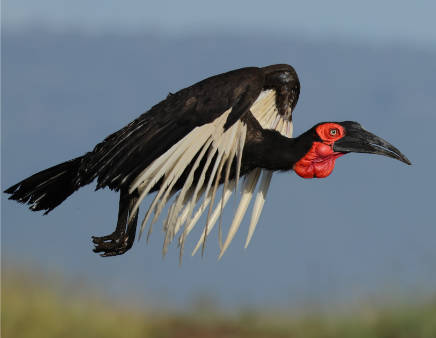
Southern Ground Hornbill by David Hoddinott
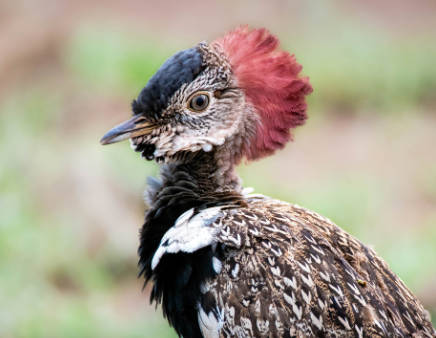
Red-crested Korhaan by Julian Parsons

The event is already fully subscribed with 6 teams In total taking part in what will be a light-hearted, exciting competition where teams explore Kruger National Park from top to bottom, recording all the species of birds and mammals they encounter over an 8-day period. Each team will have its own open safari vehicle, professional safari driver guide, and experienced volunteer birding leader. Each team will be awarded a single point for every species of bird and mammal, regardless of the difficulty associated with locating the species, and the team with the highest score at the end of the 8 days will be crowned the Birding & Wildlife Champions of Kruger.

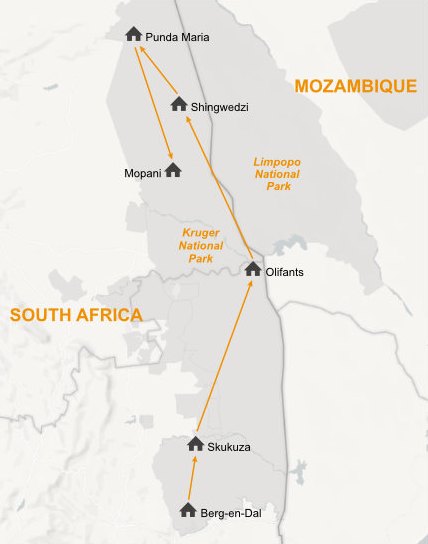
We will be exploring the length of Kruger from Punda Maria in the north to Berg-en-Dal in the south. The challenge will begin in Johannesburg, where we will enjoy a welcome dinner and a briefing. Thereafter, we will all transfer to Mopani and the challenge begins as we enter Kruger National Park. The challenge ultimately concludes in Berg-en-Dal for an epic final night of festivities and prize-giving.

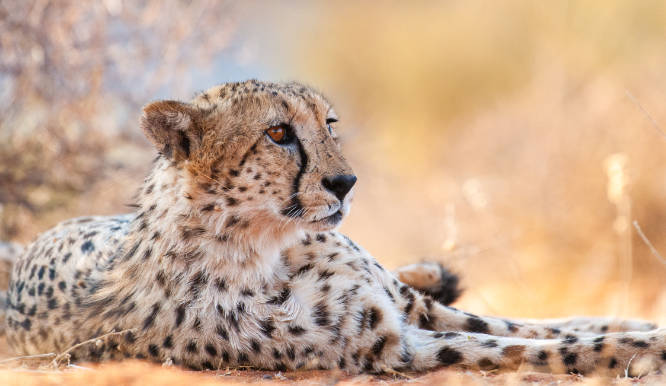
Cheetah by Julian Parsons
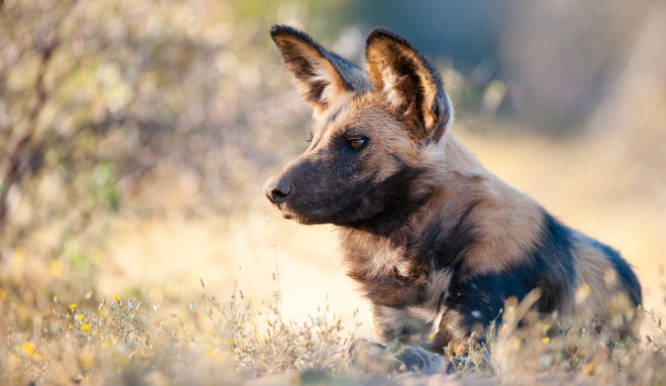
African Wild Dog by Julian Parsons

OCTOBER BIG DAY OVERVIEW

Rockjumper recorded an impressive 1121 species on October Big Day, supported by our tour leaders spread across the globe. Paul Varney added key endemics from Reunion. Keith Valentine contributed from Zambia, while Ryan Tyrer logged Spiny Forest specials in Madagascar. Reece Dodd added Miombo woodland specials from Zimbabwe. Dušan Brinkhuizen added strong Neotropical diversity from Ecuador, Daniel Danckwerts added an exceptional diversity of species from Indonesia and Adam Riley compiled an excellent list around Fortaleza, Brazil. Meg, Kaily, Clayton Burne and Wade Lee delivered broad coverage in South Africa. Rob Williams documented the extremely rare Cherry Throated Tanager population in Brazil. Bobby Wilcox represented the team from central Nevada, and Erik Forsyth secured standout highlights in New Zealand that included Australasian Bittern, Spotless Crake and Redpoll. Together, these efforts created a powerful eBird global snapshot of avian diversity and an outstanding October Big Day for Rockjumper.

Sunrise over the Zambezi river by Keith Valentine
Aleutian Tern and all three Frigatebirds
Miombo Tit by Reece Dodd
Sickle-billed Vanga by Ryan Tyrer
Viewing Buff-spotted Flufftail by Wade Lee
Elephants in Zambia by Keith Valentine
Ifaty Spiny Forest, Madagascar by Ryan Tyrer
Christmas Island Frigatebird by Daniel Danckwerts
Jandaya Parakeet by Adam Riley

BIRD & CONSERVATION NEWS

Loss and Rediscovery by Nigel Redman

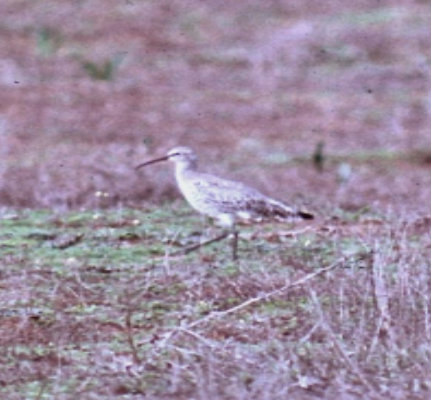
It is well known that birds are declining throughout the world, and many species are now threatened with extinction. At least 187 birds have become extinct since 1500, and that number is going to rise. It was particularly sad to hear in October this year that Slender-billed Curlew has now officially been declared extinct, having not been reliably sighted since 1995 despite much effort to look for it. Slender-billed Curlews used to breed in the taiga-steppe zone of northern Kazakhstan and southern Russia (the precise location is unknown as very few nests were ever found) and they migrated to winter in the Mediterranean area, and in particular NW Africa. They were well known at many stopover sites in eastern Europe, but were heavily persecuted in many countries including Italy, and the species was in serious decline by the mid 20th century. Despite a reliable report of a flock of 123 in Morocco in 1974, by the early 1980s sightings had all but dried up. I made my first winter visit to Morocco in November 1986, and was lucky enough to find 5 Slender-billed Curlews at the Merja Zerga wetland in northern Morocco. Three birds returned the following winter and for each year thereafter until the last bird was seen there in February 1995. I made four visits to Merja Zerga in that period, along with many other birders who made the pilgrimage for the last chance to see a Slender-billed Curlew. An entire curlew industry quickly built up, based at the Café Milano in Moulay Bousselham, with a log book to record sightings and local guides available to find the birds for you. Apart from a possible record in 1998, the species has not been seen in Morocco since 1995.

Slender-billed Curlew disappeared before the advent of digital technology, and this faded film photo is my only record of the species. Morocco, November 1986.

Not wishing to end on a gloomy note, it was great to read in August this year that the near-mythical Jerdon’s Courser has been re-found in southern India, having not been seen since 2004. A bird was heard and sound-recorded at a new location, and so a critically endangered species still hangs on, for a little while longer at least.

Slender-billed Curlew by Nigel Redman
Anambra Waxbill & Shelley's Eagle-Owl by David Hoddinott
Anambra Waxbill by David Hoddinott
Shelley's Eagle-Owl by David Hoddinott

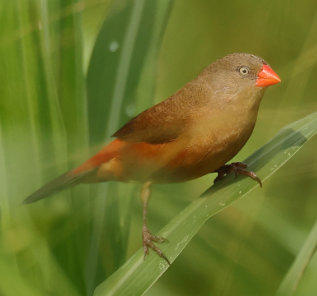
Anambra Waxbill
David has just been on a fabulous scouting mission to Benin via Togo. After some effort he was rewarded with the localized Anambra Waxbill! This stunning little estrildid has been seen by very birders (just 6 e-bird records) and is restricted to just a tiny patch in Benin and Southern Nigeria.

Shelley’s Eagle Owl
Also a massive find was this Shelley’s Eagle-Owl in Ghana! While David was observing the White-necked Rockfowl with his group, he was alerted by a strange call from the forest. Following up he realized it was this mega species. With only 8 ebird records it is one of the rarest and most little-known owls on Earth and is likely the first ever sighting of one on a commercial birding tour!

Hope in the Gulf by Adam Walleyn

Just a few hours from my home in San Diego, the world’s rarest marine mammal is making its last stand against extinction. The Vaquita is a porpoise found only in the upper Gulf of California and it has declined precipitously in the past few decades. The decline is caused primarily through unintentional bycatch in the illegal Totoaba fishery. When the Vaquita CPR program was unsuccesful in 2017 to establish a captive population and numbers plummeted to almost certainly single digits, the Vaquita’s extinction appeared inevitable. Now, almost a decade later the species continues to fight for survival seemingly against all odds. Recent years have seen increased protections and successful anti-illegal fishing measures enacted within the Vaquita’s tiny home range. A glimmer of hope is returning that somehow this amazingly resilient animal could yet pull through. In September of this year I joined a team of marine mammal observers spending a month in the heart of the Vaquita’s range with the goal of coming up with a population estimate. By survey’s end we believe we had observed somewhere between 7 and 10 Vaquitas. Still periously low but a slight uptick from last year’s survey. The best news of all was that we had several sightings of a Vaquita named Frida who was accompanied by her calf, the first Vaquita calf seen in a couple of years and proof that the Vaquita is not only hanging on but still reproducing. The future obviously remains incredibly precarious for the Vaquita, but we owe it to this amazing animal to give it every chance to fight for its continued survival.

BIRD OF THE YEAR

Lear's Macaw by David Hoddinott

David Hoddinott – Lear’s Macaw

Bird of the Year – Lear’s Macaw from our NE Brazil tour. It was such a spectacle seeing and hearing a flock of 40 of these magnificent birds, in their nesting home of red cliffs in beautiful light at dawn. Wow! Can’t wait for my next trip there.

Usambara Hyliota by Erik Gropp

André Bernon – Usambara Hyliota

We saw many fantastic birds on our Tanzania Mega tour a few months ago. A highlight and my bird of the year is this Usambara Hyliota. We searched hard but on our third day, we found a stunning male, in full morning sunlight! An extremely tough and very localised species.

Marquesan Monarch by Lisle Gwynn

Lisle Gwynn – Marquesan Monarch

Almost everything in the Marquesas is difficult to get to, but Marquesan Monarch is among the toughest. Requirements? A big boat, a small boat, a jump and a swim before a hike to the top of the island through arid scrub and sites of ancient celestial navigation. A chronically rare black, tonic purple and ivory billed beauty is the reward.

Grey-breasted Mountain Toucan by Alexander Alvarado

Alexander Alvarado – Grey-breasted Mountain Toucan

After enjoying the huge diversity of Hacienda El Bosque in Manizales we added this gorgeous Grey-breasted Mountain Toucan which we couldn’t stop watching for over an hour, all participants got this prized moment just before leaving the area. Colombia provided unforgettable experiences to our group but this is into the more memorables!

White-bellied Seedsnipe by Bobby Wilcox
Dwarf Sperm Whale by Bobby Wilcox

Bobby Wilcox  – White-bellied Seedsnipe & Dwarf Sperm Whale

Bird of the year would have to be the White-bellied Seedsnipe on my Patagonia tour. Most of the group courageously trekked most of the way, but only a few of us made the last climb over steep rocky slopes to find this mega that I’ve been searching for years to no avail, getting amazing looks as it slowly pecked its way through the low vegetation mats and grass clumps.

My favorite tour moment was on my recent Galapagos tour when a distant jumping cetacean was spotted. I quickly zeroed in on it with my camera and fired off a few shots over the course of successive jumps. Only later during photo review did I realize we had something really cool, which was confirmed as Dwarf Sperm Whale by numerous cetacean experts, a quite rare creature rarely seen alive, most often found washed up dead on a beach.

Collared Flycatcher by Clayton Burne

Clayton Burne – Collared Flycatcher

Rarities in the middle of the austral winter aren’t typically on anyone’s bingo card. So, the news of a mega Collared Flycatcher being found the prior evening at a remote border outpost before weighed heavily at the next morning’s coffee time. It was the middle of the week, there was work to be done – we’d plan to go down on the weekend… Though not a globally rare species, its core range in Central Europe and patchy wintering grounds in Zambia and Malawi had kept it off my personal life list. The prospect of a lifer for the year was equally enticing, it had been a slow year with the only new addition being a heard White-winged Flufftail.

Whilst I was scratching around the plate trying to plan a suitable day in the future for a twitch, Meg decided we should swing from the heels, right now. A 20 minute flurry of activity saw all the gear, dogs and humans in the truck and on our way to the Drakensberg foothills, several hours drive away.

A small bunch of fellow twitchers were already in place by the time we arrived, so it only took a few minutes for the little fellow to show, though a little longer to show well. Photos in the bag and another successful twitch that even the dogs could lay claim to.

Blue Bird-of-paradise by Daniel Danckwerts

Daniel Danckwerts – Blue Bird-of-paradise

This year’s Bird of the Year is unequivocally the Blue Bird-of-Paradise, considered by many to be the most beautiful bird in the world. I led back-to-back tours in Papua New Guinea in July, and we enjoyed multiple encounters with this wondrous species across both tours. Our best sighting involved a pre-dawn start and a steep hike guided only by torchlight. We arrived at its calling post, soaked from the early morning dew, and the anxious minutes ticked by. After no less than two hours, we accepted defeat and made our way back down the same trail with our heads hanging low.

I was relieved when some of my guests asked if we could try again, which we did the following day. Another pre-dawn start, another steep hike up, this time in the rain, and just as all odds seemed against us, the splendiferous male appeared in all his glory, cued perfectly at sunrise. We watched him call for close to ten minutes before he disappeared as quickly as he had arrived. The memory of this encounter remains one of my all-time top birding highlights!

Plains-wanderer by Greg de Klerk

Greg de Klerk – Plains-wanderer

I recently made the decision to try and find all the world’s bird families and I had the opportunity to add the monotypic Plains-wanderer to my list when I led the Australia East Coast tour in September.

This incredible species, the sole member of the Pedionomidae family, is primarily crepuscular but it is easiest to find at night. Inhabiting the short stubby grasslands of the Australian interior, their small quail-like posture and behavior allows them to hide expertly behind grass tussocks making them challenging to find.

Armed with infrared scopes, a full moon, our flashlight and cameras, we wondered off into the grasslands, meandering between dense grass tussocks when suddenly a striking female stepped into the open less than five meters from us and provided amazing and prolonged views. Just when we thought the night couldn’t get better, a male joined the fray, at one point running over my shoe after having sat next to one of my guests who was down on his haunches. WHAT AN EXPERIENCE! What an awesome bird.

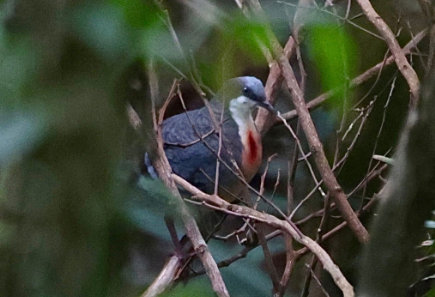
Luzon Bleeding Heart by Warwick Board

Adam Walleyn – Luzon Bleeding Heart

This year’s Philippines tour was one of my most memorable Rockjumper tours. Well known for some challenging birding, this year’s tour went amazingly well with difficult bird after difficult bird showing well for our enthusiastic group. While birding in the Sierra Madres in an area with few if any previous bleeding heart records I almost jokingly played the call of the Bleeding Heart while we were waiting for a Bicol Ground Warbler to show itself. A few minutes later Simon announced that it was walking right up to us. I thought he was talking about the ground warbler and my jaw hit the floor when a Luzon Bleeding Heart walked right up to the group and then perched below us showing off its spectacular bleeding heart, an amazing moment for us stunned observers.

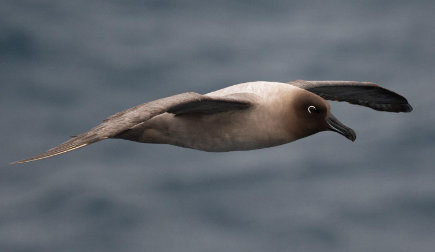
Light-mantled Albatross by Amanda Guercio

Amanda Guercio – Light-mantled Albatross

Bird highlight would have to be Light-mantled Albatross on Flock to Marion, and a tour highlight would be watching two Sclater’s Crowned-Pigeons at eye level drinking from the river near Kwatu in PNG.

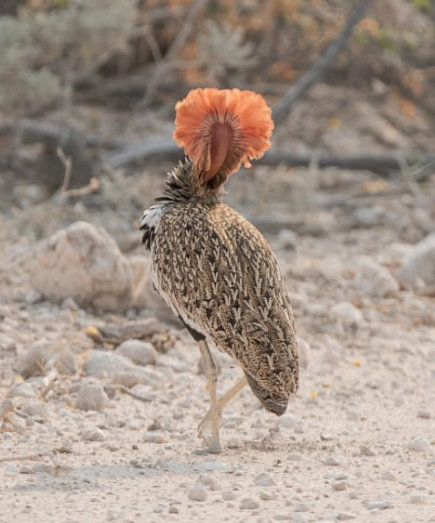
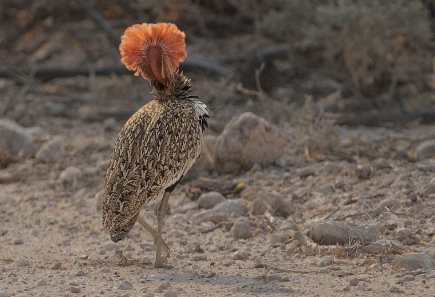
Red-crested Korhaan by Ryan Tyrer

Ryan Tyrer – Red-crested Korhaan

It is always difficult to choose a bird or a sighting of the year, especially when you as a guide are afforded the opportunity to do a lot of travelling during the course of that year.

Sometimes we might visit the same locations on more than one occasion and more often than not we will see the same birds over and over.

But every so often we see something that we don’t usually see. In this scenario it was watching a male and female Red-crested Korhaan in a courtship display. Or rather a male displaying for a seemingly uninterested female.

Red-crested Korhaan get their name from their brilliant red crest but unfortunately it is only seen in a scene like this, when they raise it in an attempt to attract a mate.

It was early one morning and we were driving the dusty roads of Etosha National Park in Namibia and we stumbled upon this sighting. The male had his crest raised and was revving around this female making the best attempt he could at seducing her. His attempts though appeared too aggressive for her liking and he was chasing her in and out of the bushes, across the road this way and that. I don’t think the angry face he carried was helping his cause either! She eventually ran far away enough for him to realise his attempts would be in vain.

This photo that goes with it is not your usual shot as we can not see the bird’s face but the backlight lit crest was showing so brilliantly it was hard not to snap off a few pictures. The scene that unfolded before us made the picture even more special and this has to go down as my bird and tour sighting of the year.

Gould's Shortwing by Glen Valentine

Glen Valentine – Gould’s Shortwing

This is always a fun but tough decision! My top bird of the year for 2025 was no easy task with the likes of Spotted Thrush-babbler, Dybowski’s Twinspot, White-necked and Grey-necked Rockfowl, Blyth’s Tragopan, Mishmi Wren-babbler, Grandala, Rusty-bellied Shortwing, Cachar Wedge-billed Babbler, Bornean Peacock-Pheasant, Bristlehead, Rail-babbler, Hose’s Broadbill, Dulit Frogmouth, Geomalia, Minahassa Masked Owl, Wilson’s Bird-of-paradise, Moluccan Woodcock and Thick-billed Ground Pigeon all making the short list!

However, pride of place eventually had to go to one of my most wanted birds in all of Asia, the once mythical and impossible-to-see Gould’s Shortwing. This “Himalayan Jewel” winters in the densest, wettest, mid-elevation oak-rhododendron forests of Bhutan, North-east India and Yunnan and breeds above the treeline in rocky, bushy alpine habitat in Nepal, Bhutan and southern China. Previously, one of the Himalayas’ mystery birds, this species was recently found to be fairly regular and even somewhat numerous in the heart of the remote Mishmi Hills in extreme north-eastern India during winter and spring, an area that has only very recently become accessible.

During our comprehensive tour of North-east India earlier this year in April/May, we managed to track down this little understory forest gem, several males of which showed sublimely for the entire group. A very special and memorable experience indeed!

Geomalia by Julian Parsons

Julain Parsons – Geomalia

The bird that truly set my heart racing this year must have been hearing an Invisible Rail (Gallirallus wallacii), a near mythical bird endemic to the dense, shadowy undergrowth of Indonesian island of Halmahera. It was a painful and bittersweet experience as it aptly lived up to its ghostly name, lurking mere feet from our hide, incessantly calling as if to tease us. With my year’s most sought-after bird skulking just out of sight, another rarely seen Indonesian endemic captured my heart. The Geomalia. Although not much to look as, the Geomalia is a rare and range-restricted thrush species endemic to the montane forests of Sulawesi, Indonesia.

Scaly Ground Roller by Keith Valentine

Keith Valentine – Scaly Ground Roller

A fun year overall but with all my guiding time spent visiting old stomping grounds, the volume of lifers was significantly down! Still, it was a memorable year with return visits to two personal favourites of mine – India and Madagascar, both of which I visited for the first time 20 years ago. Both produced some fabulous species, including many wonderful mammals, but I think bird of the year has to go to one of my all-time favourites, the Scaly Ground Roller. This was one of my most-wanted species when I first visited back in 2005 and once again this year produced brilliant sightings. A cryptically plumaged under-story forest skulker views like this of Scaly Ground Roller are aways a treat.

African Wild Dog by Mark Beevers

Mark Beevers – African Wild Dog & Araripe Manakin

Bird of the year Araripe Manakin something else I’d longed to see, don’t ask me why, I just remember the story of it being discovered and wanted to see it for myself.

My highlight of the year has got to be the two packs of wild dog in Kruger pre Marion tour, something I’ve always wanted to see. It was an amazing few days, we logged 238 species with 13 write ins plus 30 mammals including two packs of wild dogs (10 each), big five seen one day and recorded the following day but lion only heard, four leopards, 7 white rhino,12 lion, the list goes on, very happy clients and I got a lifer in dusky lark. Awesome place.

White-bellied Heron by Nigel Redman
Satyr Tragopan by Nigel Redman

Nigel Redman – White-bellied Heron & Satyr Tragopan

Another year draws to a close and once again there were many highlights. After considering a lot of candidates, my bird of the year was White-bellied Heron, seen in Bhutan in April. It was my only lifer on that Bhutan tour, and a much sought-after species having missed it previously. White-bellied Heron is the second largest heron in the world and the rarest. It is estimated that only 45 individuals remain, with about half of them in Bhutan. This iconic species requires undisturbed forest alongside major rivers in the eastern Himalayan foothills, a habitat that is increasingly scarce and under threat in the heavily populated Indian subcontinent. We searched long and hard for it in several prime locations, and eventually we found this obliging individual close to the river. Although a bit far for photos with conventional cameras, I did manage a digi-scoped record shot of it.

Chestnut-headed Tesia by Paul Varney
Mascarene Petrel by Paul Varney

Paul Varney – Chestnut-headed Tesia & Mascarene Petrel

Choosing your favourite bird and tour moment of the year is really tough and 2025 is a particular challenge as I have been lucky to have enjoyed seeing so many amazing birds and experienced some incredible moments.

I’ve been lucky to lead tours to Thailand, Iceland, the tropical islands of the Indian Ocean and the plains and forests of East Africa.

Some of my favourite birds of the year were point blank views of Nicobar Pigeon on the Similan islands off Thailand, common but stunning looking Vulturine Guineafowl in Kenya and beautifully marked Harlequin Ducks in Iceland. My favourite bird of the year though is a toss up between 2 very different species. First, the ghostly elegance of a male Pallid Harrier quartering the savannah of Tarangire NP in Tanzania, but this is eclipsed by the incredible views of the shy and skulking Chestnut-headed Tesia on our Thailand tour back in February.

As for moments, 2 really stand out. One just last month, again in Tarangire NP when a night drive produced unbelievable close views of Aardvark. We had already seen East African Spring Hare but Aardvark is a really special animal to see. The best moment of 2025 however was on a pelagic trip out of Reunion in the Indian Ocean when we became one of a tiny group of people to see a Mascarene Petrel at sea. Although distant we got decent views and even photos which allowed confident identification of this ultra rare seabird. 2025 was amazing and 2026 is already shaping up to be pretty memorable too.

Inti Tanager by Stephan Lorenz

Stephan Lorenz – Inti Tnager

In 2025, I traveled to ten countries across four continents, including Rockjumper tours in India, Bhutan, Indonesia, Bolivia, and Kenya, as well as undertaking some personal travels. I was fortunate enough to see nearly 3,500 species in 2025, and with such an incredibly diverse year, it was a challenge to select a Bird of the Year. Some of the runner-ups included the rare Wattled Curassow on an island near Leticia, Colombia, the impressive Heuglin’s Bustard on the savanna of Kenya, the monotypic Hylocitrea in Lore Lindu, Sulawesi, the difficult Flores Scops-Owl in Indonesia, the Unicolored Thrush in Bolivia, likely the rarest bird of the year, and many more. In the end, the bird of the year for me was the incomparable Inti Tanager seen well during my Rockjumper Bolivia Remote Extension with a fantastic group of longtime guests. The migratory Inti Tanager was first sighted by ornithologists on its wintering grounds in southeast Peru in 2000, and it took another 11 years before the discovery of its breeding grounds in a remote corner of northwestern Bolivia in the Machariapo and Tuichi Valleys. This part of Bolivia remains remote and only accessible via a rugged dirt track that crosses the Andes before dropping into the arid valleys around Apolo. It took us two days and about 20 hours of driving to reach the small town of Apolo. From there, it was another three hours of driving along rough dirt roads to reach the deciduous tropical forest where the Inti Tanagers nest. It was early October, and there was some uncertainty about whether the tanagers had arrived in numbers on their territories. After a bumpy drive in the dark, we finally arrived at the start of the valley after sunrise. We exited the two four-wheel drive vehicles and began walking along the dirt track that descended into the valley with tall and dense tropical deciduous forest blanketing the narrow valley. Within minutes, we got a response and heard the loud and cheerful notes of an Inti Tanagers emanate from the trees below us. A few moments later, an Inti Tanager flew in and offered several brief but clear views. We celebrated all around, and during the remainder of the morning, we discovered at least one more individual Inti Tanager further along the road that offered lengthy views. It took another two full days to return to La Paz, where we again celebrated our grand success.

Araripe Manakin by Rob Williams

Rob Williams – Araripe Manakin

2025 has been a year of great birds for me and choosing a favourite is always hard. But there was a bird I had been waiting to see since I first read of it in the 1998 paper that described it. The Araripe Manakin is confined to a 300km2 area of forested escarpment with a world population estimated at around 800 birds; it is one of Brazil’s rarest and most range-restricted birds, being classified as Critically Endangered due to its small and still declining population. I had been close to its range in 1997 before it was described, and I had long-wanted to get there and see this stunning bird.

On the north-east Brazil Mega tour in September we enjoyed finding at least three birds and getting great views of an adult male that repeatedly returned to the same fruiting Cecropia tree. It lived up to over 20 years of expectation, but I still can’t wait to see it again on next year’s tour.

Black Stilt by Erik Forsyth

Erik Forsyth – Black Stilt

My bird of the year is the Black Stilt. Critically endangered and endemic there are less than 200 of these stunners in the wild! Every August about 60-75 captive bred juveniles are released into the Tasman River Delta to supplement a small population.
It was a tense drive from our hotel to the Tasman River Delta. My guests were unaware of my worry that we really need to find the species here as it can be very difficult to find at other water bodies. We arrived and headed out onto the floodplain and to my relief I spotted an adult standing 300m off on a small wet area. What a relief! We approached cautiously and eventually we were within 30m of this stunner. While enjoying this occasion, it walked up to within 5m of us and then strode off…Fantastic! It was a bitter-sweet moment as I know the serious situation this species is facing, as many captive bred birds probably succumb to the very harsh conditions in the delta as well as feral cats, rats and hedgehogs eating their eggs.

Scarlet-banded Barbet by Lev Frid

Lev Frid – Scarlet-banded Barbet

With such a full year of fantastic birds and places, to choose just one is an impossible! One of the standout birding moments for me this year was in northern Peru, close to the small town of Plataforma. Our intrepid Rockjumper group, after a long drive, a tough hike mostly through knee-deep mud, and a nail-biting wait, were rewarded with great views of one of South America’s most range-restricted and newly-discovered birds – the Scarlet-banded Barbet. This spectacular barbet was only described to science in 2000. After waiting for a while at a favourite tree, a pair of barbets gave great views alongside Gilded and Versicoloured Barbets, and a host of others. An unforgettable moment, and a great adventure and story to boot!

Richard Thomas – Red Goshawk

2025 has been a great birding year for me: highlights have included Spectacled Eider in the Netherlands, Crested Quail-dove in Jamaica, Amami Woodcock in Japan, Slaty-backed Thrush in Tanimbar, and Kagu in New Caledonia. But for me, one bird stands out more than any other as seeing it marked the end of a personal quest that had lasted more than 30 years.

In 1990, myself and my wife Sarah moved to Australia. During our three years there we travelled the length and breadth of the country, recording all but two of the continent’s land birds.

Red Goshawk by Richard Thomas

One of them, the mythical Night Parrot, was believed possibly extinct (although happily was rediscovered in 2013 in a remote part of Queensland to which access, even to this day is not permitted: it remains one of the most highly desired birds in the world). The other – Red Goshawk – is an extremely rare and elusive forest raptor, found at low density across the northern third of Australia. We spent weeks looking for it in suitable habitat without success. Frustratingly, we once visited a known nest but the birds were absent and thus Red Goshawk became the only bird we missed in Australia.

Several years after we returned to the UK, a birding friend discovered a Red Goshawk nest that was accessible near Kakadu National Park. The nest remained active for many years but work and other commitments meant we never had the opportunity to return to Australia during that time. After the nest was abandoned I feared I had missed my only chance of seeing the species. Things took a turn for the better around 2010 when information about a regular nest site on Cape York Peninsula gradually circulated into the birding scene. I was determined we were going to see these birds, come what may. However, the logistics of getting to the nest area were against us. For many years, hire car companies in Cairns explicitly forbade driving their vehicles – even fully equipped four wheel drives – up Cape York Peninsula. In recent years, the Queensland Government came to my rescue by gradually building a bitumen road running up the Peninsula that is now fully gazetted and thus hire car accessible.

In October 2025, I was cruising the Banda Sea, visiting various islands to see their endemic birds, afterwards visiting Java and Bali. The short hop to Cairns and the chance to see Red Goshawk was too tempting to miss. On 20th October, I flew into Cairns, met Sarah who had flown out to meet me, picked up our hire car and bought supplies for the trip up Cape York. After several hours at the wheel, we arrived in Laura and camped for the night. The following day we set off early towards the pin location where a friend had said the goshawks should be nesting. The last few kilometers of the drive passed slowly. I could feel the anticipation and tension rising in me. Would the birds be in their usual tree? Had the nest been successful this year? Would the young already have fledged and left the area? As we approached the appointed pin to learn our birding fate, I was nervous to say the least. A vehicle was already parked at the site. Inside was a German birder who asked if we’d come to see the Red Goshawks. He pointed – there’s the female and the two chicks near the nest. I felt a huge wave of relief sweep over me. It had taken more than 30 years, but finally I’d got there: Red Goshawk.

Both chicks were fully fledged and in pristine deep red juvenile plumage while the female’s plumage was heavily worn from the toil of incubation and chick rearing, but nevertheless showed the unmistakable red coloration of this rare species. Over the next two hours we watched the birds, which seemed oblivious to our presence. The female tore up a prey item and fed it to each chick in turn, while later they flew to the adjacent trees and called to one another. I was spellbound.

We revisited the following day. The birds were still present, but to our surprise, the flimsy looking nest had fallen out of the tree and was now on the ground. Had we cut things incredibly fine and jammed Red Goshawk on our last gasp chance? Only time will tell, but fingers crossed they will rebuild the nest in 2026 and once again make the dreams of visiting birders come true.

Magellanic Woodpecker by Stu Elsom

Stu Elsom – Magellanic Woodpecker

Bird of the year has to be Chile’s flagship species, the magnificent Magellanic Woodpecker. Early morning we were treated to incredible views of a family party feeding and calling. A huge and impressive species with the male sporting a bright red head whilst the female shows a wholly black head with a curled crest. These were very impressive birds indeed and are the largest extant woodpecker in the New World! It’s hardly surprising that Magellanic Woodpecker was voted the joint bird of the trip by the group!

Quail Plover by Stratton Hatfield

Stratton Hatfield – Quail Plover

I think my bird of the year has to be the Quail Plover I saw in Tsavo West in June. It’s an extremely unpredictable species in Kenya and was at the top of my most-wanted list for the country. This one was just a few meters from me and froze as I approached, allowing me to photograph it through gaps in the dry grass. A very memorable encounter with a bizarre and little-known species.