1-888-990-5552
 info@rockjumper.com
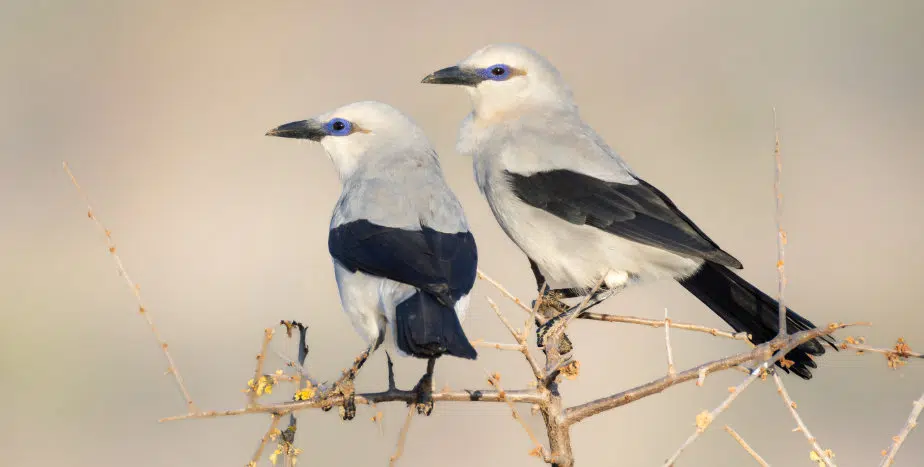
Africa is home to many fabulous countries for birding and Ethiopia easily ranks in the top 5 for overall accessibility, the ease of birding and the sheer quality of the species available. The country covers a total area of about 1,104,300 square kilometres (426,400 square miles), making it the 27th-largest country in the world. That is roughly the same size as Spain and France combined or double the size of Texas.
From a birding perspective over 860 species have been recorded in the country, of which 16 are true endemics, and a further 33 are near endemic. The country’s location in the Horn of Africa together with a wide diversity of habitats including the Abyssinian Highlands contribute greatly to the number of specials and overall avian diversity. This article provides an overview of Ethiopia’s endemic and near endemic birds, their habitats, ranges, and conservation status.


Special Notes:
- Nechisar Nightjar Caprimulgus solala is worth a separate mention. It is one of Africa’s true ornithological enigmas and is only known from a single roadkill specimen, collected in Nechisar National Park in Sep 1990. Subsequent searches have failed to find any conclusive evidence of its existence, and it remains a ‘ghost’.
- Moorland Francolin Scleroptila psilolaema is now an endemic to Ethiopia given the recent split of Elgon Francolin Scleroptila elgonensis, which occurs in the highlands of central Kenya and far eastern Uganda.
Many authorities still talk about 20 endemics to Ethiopia which is no longer correct based on the most recent taxonomic updates. Species that have in the past been noted as endemic like Black-fronted Spurfowl, Brown-faced Go-away-bird, Liben (Sidamo) Lark, Erlanger’s Lark, and Kafa White-eye are no longer considered true Ethiopian endemics as they have either been lumped with other species that have wider distributions or have been found to occur in neighbouring countries which then shifts them from endemic status to near endemics status.
Under AviList these changes include the following:
- Black-fronted Spurfowl Pternistis atrifrons is no longer considered a separate species and has been lumped with Chestnut-naped Spurfowl Pternistis castaneicollis which occupies a slightly wider range through Ethiopia, northern Somalia and into far northern Kenya. If Black-fronted Spurfowl is split in the future this species would still be listed as a near-endemic given its occurrence in southern Ethiopia and northern Kenya.
- Brown-faced Go-away-bird Corythaixoides personatus is occasionally split by some authorities as a separate species. It would then be an Ethiopian endemic with the core of its range through the Rift Valley. AviList includes Brown-faced Go-away-bird within the much more widespread Bare-faced Go-away-bird Crinifer personatus.
- Liben Lark / Sidamo Lark Heteromirafra sidamoensis was a full species for many years and was endemic to Ethiopia. Recently however it’s been lumped within Archer’s Lark Heteromirafra archeri. Even then this species is extremely localised with tiny populations in southern Ethiopia, eastern Ethiopia and adjacent Somalia.
- Erlanger’s Lark Calandrella erlangeri is also not considered a full species in AviList but is rather included within Blanford’s Lark Calandrella blanfordi. If the species was to be split in the future then Erlanger’s Lark would become an Ethiopian endemic while Blanford’s Lark would remain a near-endemic as it occurs in Ethiopia, Eritrea and Somalia.
- Kafa White-eye Zosterops kaffensis is now lumped by Avilist with Kulal White-eye Zosterops kulalensis. The latter species, if split is endemic to Mt Kulal in Kenya. Given current taxonomy the species is a near-endemic to Ethiopia. Further to this some authorities still consider Kafa White-eye Zosterops kaffensis to be a sub-species under the large Montane White-eye Zosterops poliogastrus complex.
The above differences explain much of the confusion between typically published totals.
Near endemic species for Ethiopia are usually defined as species which are overwhelmingly or substantially centred within Ethiopia but extend into Eritrea and/or immediately neighbouring Horn of Africa countries such as Somalia and Djibouti. Here we recognise the following 33 species as Ethiopian near endemics based on the latest AviList taxonomy.
We have outlined the countries where all the below near endemics can be found using the following key:
Ethiopia: ETH | Eritrea: ERI | Djibouti: DJI | Somalia: SOM | Sudan: SUD | Kenya: KEN


It is worth mentioning that many authorities often refer to just 14 near endemics. This is essentially listing only the near endemic species that are confined to the Abyssinian highlands of Ethiopia and Eritrea. The list above includes many other species that have tiny ranges in one or more neighbouring countries such as Djibouti, Kenya, Sudan and Somalia. Most of their range however falls in Ethiopia and for purposes of highlighting these range restricted specials we have included them as near endemics to Ethiopia.
Please also note the following with regards to some of the species listed above. For Chestnut-naped Spurfowl, Archer’s Lark, Blanford’s Lark and Kafa White-eye please see the notes below the endemics section above.
- Black-billed Woodhoopoe Phoeniculus somaliensis is sometimes lumped with Violet Woodhoopoe Phoeniculus damarensis. The latter species, when split, is a near endemic to Namibia and Angola. The current Avilist taxonomy has them split.
- Ethiopian Bee-eater Merops lafresnayii is a fairly recent split from the much more widespread Blue-cheeked Bee-eater Merops variegatus.
- Ethiopian Boubou Laniarius aethiopicus has recently been split from the far more widespread Tropical Boubou Laniarius major.
- Ethiopian White-eye Zosterops poliogastrus was part of the broad collective species complex that was previously known as Montane White-eye. Ethiopian White-eye, being the nominate species within the group retained the scientific name Zosterops poliogastrus. The following species were all at one point assumed under Montane White-eye and are now considered full species.
- Kafa White-eye Zosterops kaffensis: Found in southwestern Ethiopia and northern Kenya (Mount Kulal).
- Broad-ringed White-eye Zosterops eurycricotus: Native to Mount Kilimanjaro, Mount Meru, and surrounding regions in northern Tanzania.
- Mbulu White-eye Zosterops mbuluensis: Found in parts of southern Kenya and northern Tanzania.
- Kikuyu White-eye Zosterops kikuyuensis: Restricted to the central Kenyan highlands like Mount Kenya and the Aberdare Range.
- Taita White-eye Zosterops silvanus: Endemic to the tiny, isolated Taita Hills in southeastern Kenya.
- South Pare White-eye Zosterops winifredae: Restricted strictly to the South Pare Mountains in northeastern Tanzania.
- Ethiopian Thrush Turdus simensis is one of the more recent splits to have come from the Horn of Africa. It was previously treated as a subspecies of the widespread Groundscraper Thrush Turdus litsitsirupa.
- Rusty-breasted Wheatear Oenanthe frenata is now considered a separate species from Buff-breasted Wheatear Oenanthe bottae. The latter is found through the Arabian Peninsula in Yemen and Saudi Arabia while Rusty-breasted Wheatear Oenanthe frenata is found in Ethiopia, Eritrea and Djibouti. The species used to also go by the common name of Botta’s Wheatear.
- Should Abyssinian Wheater Oenanthe lugubris be split from the Kenya & Tanzania population then it would become a near endemic to Ethiopia occurring in Ethiopia, Eritrea and Somalia. The species in Kenya & Tanzania would then become Schalow’s Wheatear Oenanthe schalowi. This split is not widely recognized.
- Some authorities still split Abyssinian Waxbill Estrilda ochrogaster from the more widespread Fawn-breasted Waxbill Estrilda paludicola. This split is currently not recognised by AviList but if that were to change then Abyssinian Waxbill would become a near endemic with most of its population centred in Ethiopia with occasional records in Sudan.
So, why is Ethiopia so rich in endemic birds?
Ethiopia’s exceptional level of endemism is closely linked to its geography. Much of the country is dominated by the vast Ethiopian Highlands, which are divided by the Great Rift Valley and rise from surrounding arid lowlands to Afro-alpine plateaus exceeding 4,000 metres. Over long periods, these isolated mountains, valleys and highland forests have effectively acted as ecological islands, allowing distinctive populations to evolve in relative isolation. The result is an extraordinary concentration of range-restricted birds, particularly in the highlands, while the dry savannas and bushlands of southern and eastern Ethiopia support an entirely different suite of specialities. Few African countries offer such dramatic changes in habitat and birdlife over relatively short distances.
When is the best time to visit Ethiopia for birding?
Ethiopia can be birded successfully throughout much of the year, but October through to April is generally an excellent period in which to visit. Conditions during these months are often favourable for travelling between the country’s very different habitats, while many resident birds are active and conspicuous.
October can be particularly rewarding as rains stimulate activity in some of the drier parts of the country, while the period from November into the early part of the year combines excellent resident birding with the presence of Palearctic migrants. For birders particularly interested in breeding activity and vocalisation the summer months from May to August can also be highly productive.
One of the great advantages of an Ethiopian birding trip is that most of the country’s endemic and near-endemic birds are residents rather than seasonal visitors. The timing of a trip therefore tends to influence general bird activity, migrant diversity and local conditions more than whether the key Ethiopian specialities are present at all.
Final Thoughts
Numbers and taxonomy will inevitably continue to change. Species will be split, others will be lumped, and improved knowledge of distributions may shift birds between endemic and near-endemic status. What is unlikely to change is Ethiopia’s position as one of Africa’s most exciting destinations for range-restricted birds.
Under current AviList taxonomy, the country supports 16 species found nowhere else on Earth, together with an exceptional assemblage of near-endemics and other Horn of Africa specialities. What makes this even more remarkable is how many can be encountered on a single well-planned journey. From Blue-winged Geese, Spot-breasted Lapwings and Ethiopian Siskins on the high plateaus to Prince Ruspoli’s Turaco, Ethiopian Bushcrow and White-tailed Swallow in the south, Ethiopia offers a succession of birds that simply cannot be experienced in the same combination anywhere else.
And the appeal extends well beyond birds. Ethiopian Wolf, Gelada, Mountain Nyala and other distinctive mammals, combined with spectacular highland scenery, Rift Valley lakes and a remarkably varied landscape, make Ethiopia a destination with an identity entirely its own.
Ultimately, that is the purpose of this article: not simply to arrive at a definitive number of endemics and near-endemics, but to highlight just how extraordinary Ethiopia is as a birding destination. For anyone fascinated by endemism, range-restricted species and the unique avifauna of the Horn of Africa, Ethiopia deserves a place among the continent’s great birding destinations.